แนวทางการจัดการศึกษาแบบองค์รวมเพื่อส่งเสริมทักษะด้านเทคโนโลยีของนักเรียนชั้นประถมศึกษา: กรณีศึกษา โรงเรียนบ้านตรางสวาย
Article Sidebar
Main Article Content
บทคัดย่อ
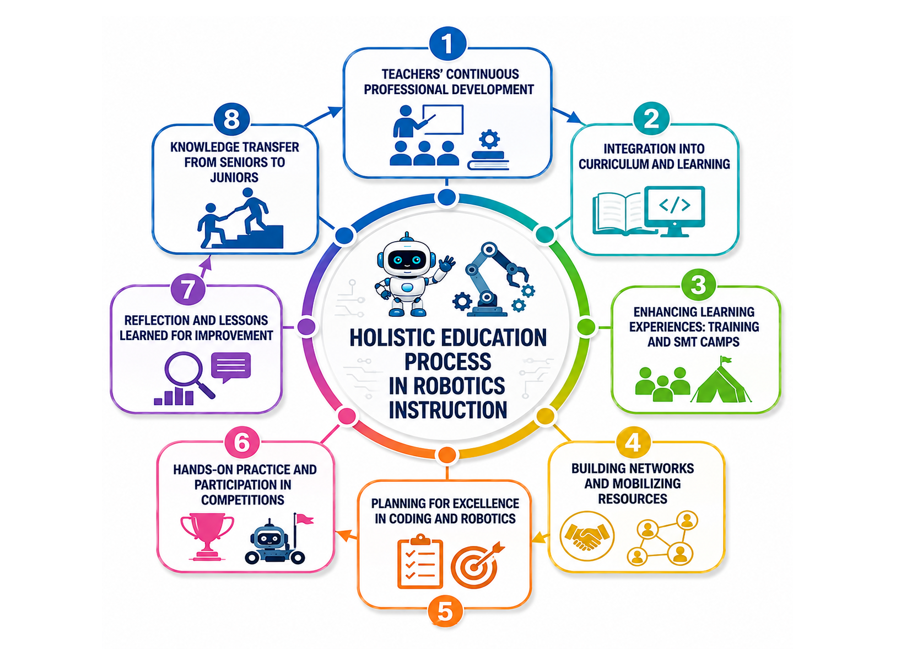
บทความนี้จึงมีวัตถุประสงค์เพื่อหาแนวทางการจัดการศึกษาแบบองค์รวมเพื่อส่งเสริมทักษะด้านเทคโนโลยีของนักเรียนชั้นประถมศึกษา โดยได้ศึกษาแนวคิดและทฤษฎีการจัดการศึกษาแบบองค์รวม กระบวนการจัดการศึกษาแบบองค์รวมในการสอนหุ่นยนต์ และผลการจัดการศึกษาแบบองค์รวมเพื่อส่งเสริมทักษะด้านเทคโนโลยีของนักเรียนชั้นประถมศึกษา กรณีศึกษา โรงเรียนบ้านตรางสวาย ผลจากการสังเคราะห์แนวคิดและบทเรียนจากกรณีศึกษา พบว่า โรงเรียนสามารถส่งเสริมทักษะด้านเทคโนโลยีของนักเรียนชั้นประถมศึกษาได้โดยใช้การสอนหุ่นยนต์มาช่วยในการพัฒนาทักษะของผู้เรียน ตามขั้นตอน 8 ขั้นตอน ดังนี้ 1. การพัฒนาวิชาชีพของครูอย่างต่อเนื่อง 2. การบูรณาการสู่หลักสูตรและการเรียนรู้ 3. การเสริมสร้างประสบการณ์การเรียนรู้ 4. การสร้างเครือข่ายและระดมทรัพยากร 5. การวางแผนส่งเสริมความเป็นเลิศ 6. การฝึกปฏิบัติจริงและการเข้าร่วมการแข่งขัน 7. การสะท้อนผลและถอดบทเรียนเพื่อการพัฒนา และ 8. การถ่ายทอดองค์ความรู้จากรุ่นพี่สู่รุ่นน้อง ซึ่งผลผลิตที่เกิดขึ้นทำให้นักเรียนชั้นประถมศึกษามีทักษะความสามารถด้านคอมพิวเตอร์สูงขึ้น ครูและนักเรียนได้รับรางวัลชนะเลิศในระดับชาติหลายรายการ รวมไปถึงความสามารถในการเข้าศึกษาต่อในระดับมัธยมศึกษาด้วยความสามารถพิเศษ ด้านหุ่นยนต์ และคอมพิวเตอร์ ส่งผลให้เกิดทักษะทางเทคโนโลยีที่จะนำไปสู่อาชีพทางคอมพิวเตอร์ในอนาคตต่อไป
Downloads
Article Details

อนุญาตภายใต้เงื่อนไข Creative Commons Attribution-NonCommercial-NoDerivatives 4.0 International License.


เอกสารอ้างอิง
Chatmaneerungcharoen, S. (2020). The School Based Professional Development for Enhancing Cooperating Science Teachers’ Technology Knowledge. Journal of Education and Innovation, 23(4), 369–380. (In Thai)
Jagsit, J., Wongari, S., & Bubpha, S. (2026). Management Guidelines for Mobilizing Resources for Small Educational Institutions Under Sakon Nakhon Primary Education Service Area Office. Journal of Social Science Development, 9(4), 214–222. (In Thai)
Meadthaisong, S., & Meadthaisong, T. (2021). Development of Tangible Programming with QR code to Control Robots for Elementary School Students. ECTI Transaction on Application Research and Development, 1(2), 8–14. https://doi.org/10.37936/ectiard.2021-1-2.243927 (In Thai) DOI: https://doi.org/10.37936/ectiard.2021-1-2.243927
Meadthaisong, T., & Meadthaisong, S. (2025). Development of ROS Programming Controlling Robots for Primary School Students. ECTI Transaction on Application Research and Development, 5(1), 14–22. https://doi.org/10.37936/ectiard.2025-5-1.255517 (In Thai) DOI: https://doi.org/10.37936/ectiard.2025-5-1.255517
Ministry of Education. (2017). Indicators and Core Learning Content for the Science Learning Area (Revised Edition B.E. 2560 [2017]) According to the Basic Education Core Curriculum B.E. 2551 (2008). The Agricultural Co-operative Federation of Thailand Printing House. (In Thai)
Miseliunaite, B., Kliziene, I., & Cibulskas, G. (2022). Can Holistic Education Solve the World’s Problems: A Systematic Literature Review. Sustainability, 14(15), 9737. https://doi.org/10.3390/su14159737 DOI: https://doi.org/10.3390/su14159737
Namkaew, N., Klinmalee, R., & Chairueang, N. (2026). The Evaluation of the Talent Development Camp Project for Students in the Special Program in Science, Mathematics, and Technology (SMTP) at Ratsada School, Under the Trang - Krabi Secondary Educational Service Area Office. Journal of Educational Review Faculty of Education in MCU, 13(1), 558–568. (In Thai)
National Statistical Office. (2023). Summary of Key Findings: The Use of Information and Communication Technology (ICT) among Children and Youth, 2023. Economic Statistics Division. (In Thai)
Noimala, W. (2021). The Essential Work Skills of The 21st Century. Ratanabuth Journal, 3(1), 45–57. (In Thai)
Noisa-nguan, W. (2024). Performance Summary Report for the Office of the Basic Education Commission (OBEC) Awards Academic Years 2022–2023. Trangsawai School. (In Thai)
Nounpao, T., Pongpinyo-o-pas, S., & Jamjang, K. (2015). The Management of the Annual Operational Planning Strategies for Basic Educational Commission Schools under Tak PrimaryEducational ServiceArea Office. Social Sciences Research and Academic Journal, 10(Special), 141–154. (In Thai)
Panphakdee, S., Najaruai, T., Kravenkit, S., & So-In, C. (2025). Kinder Bot for Early Childhood Learning. Journal of Science, Engineering and Technology Loei Rajabhat University, 5(2), 103-118. (In Thai)
Ponok, J. (2014). Holistic Education. http://legacy.orst.go.th/?knowledges=การศึกษาแบบองค์รวม-๒๔-เม (In Thai)
Raengkree, K. (2025). The Holistic Development of Learners for the Future. Journal of Interdisciplinary Social Development, 3(6), 847-859. (In Thai)
Srinuan, N., Kaewurai, R., & Yuangsoi, P. (2022). Computing Science and the Life of Learners in the Digital Age. Journal of Learning Innovation and Technology, 2(2), 1-9. (In Thai)
UNESCO, P. (n.d.). Holistic Education. https://www.unesco.org/en/query-list/h/holistic-education
UNICEF. (2025). Childhood in a Digital World. https://www.unicef.org/innocenti/reports/childhood-digital-world
