
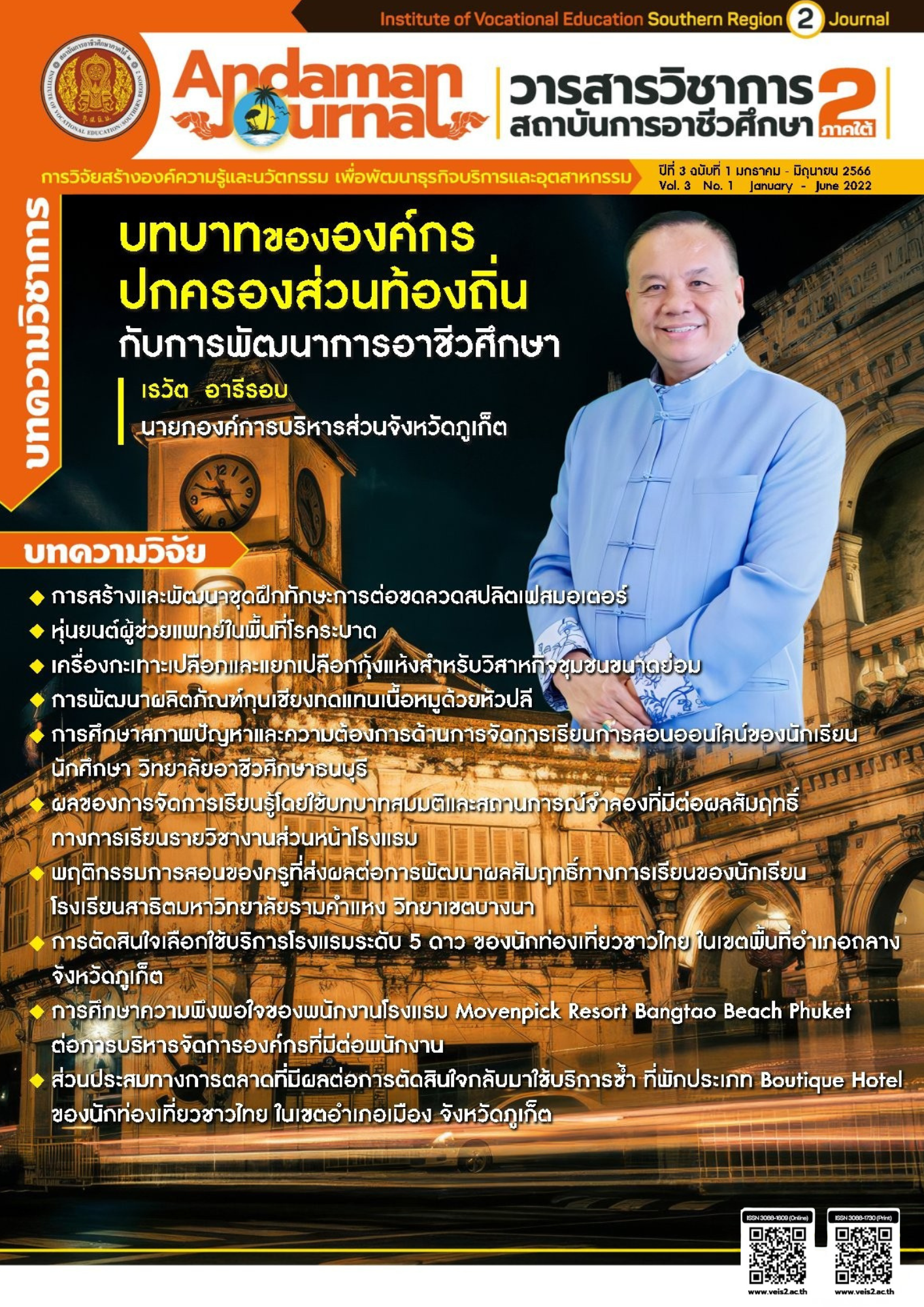
Marketing Mix (7P’s) Affecting The Decision To Return To The Boutique Hotel Accommodation Of Thai Tourists In Muang District Phuket Province
Article Sidebar
Main Article Content
Abstract
The objective of this research was to study the personal factors and behaviors of Thai tourists, as well as the marketing mix factors influencing their decision to revisit boutique hotels in Muang District, Phuket Province. A questionnaire divided into two sections was used as the research instrument. The data were analyzed using frequency, percentage, mean, and standard deviation. The sample consisted of 400 Thai tourists who had stayed at boutique hotels in Muang District, Phuket. The sample size was calculated based on an unknown population.
The findings revealed that 393 valid responses were obtained. Most respondents were female, aged 20–30 years, single, and held a bachelor’s degree. Most were company employees earning an average monthly income of 20,001–25,000 Baht. The respondents preferred Standard Rooms and usually stayed for one night. Most had previous experience staying at boutique hotels, primarily for relaxation. Their accommodation decisions were often made with partners or loved ones and were influenced by hotel design and nearby tourist attractions. Most respondents stayed during weekends, booked rooms through mobile applications, and learned about hotels through social media.
Overall, the marketing mix factors influencing the decision to revisit boutique hotels were rated at a high level. Among the individual factors, product received the highest rating, followed by place and distribution channels, price, personnel, physical evidence, and process. Promotion received the lowest rating. These findings indicate that distinctive products, convenient locations, appropriate pricing, service quality, and physical characteristics are important factors encouraging Thai tourists to revisit boutique hotels.
Article Details

This work is licensed under a Creative Commons Attribution-NonCommercial-NoDerivatives 4.0 International License.
This article is published under a Creative Commons Attribution-NonCommercial-NoDerivatives 4.0 International License (CC BY-NC-ND 4.0), which allows others to share the article with proper attribution to the authors and prohibits commercial use or modification. For any other reuse or republication, permission from the journal and the authors is required.References
ตุ้ย ชุมสาย. (2527). หลักวิชาการท่องเที่ยว. กรุงเทพฯ: แพร่พิทยา.
นิศา ชัชกัล. (2540). อุตสาหกรรมท่องเที่ยว. ภูเก็ต: โรงพิมพ์สถาบันราชภัฏภูเก็ต.
สำนักงานสถิติแห่งชาติ กระทรวงดิจิทัลเพื่อเศรษฐกิจและสังคม. (2564). [ออนไลน์]. โรงแรมที่พักประเภท Boutique Hotel. [สืบค้นเมื่อ 11 มิถุนายน 2565]. http://ittdashboard.nso.go.th/index
Roscoe. (1969). การกำหนดประชากรและกลุ่มตัวอย่าง. วิทยาลัยพยาบาลบรมราชชนนี. อุดรธานี.
ล้วน สายยศและอังคณา สายยศ. (2538). เทคนิคการวิจัยการศึกษา. (พิมพ์ครั้งที่ 5). กรุงเทพฯ: สุวีริยาสาส์น.
ชูศรี วงศ์รัตนะ. (2550). เทคนิคการใช้สถิติเพื่อการวิจัย. กรุงเทพฯ : คณะศึกษาศาสตร์ มหาวิทยาลัยศรีนครินทรวิโรฒ.
การะเกด แก้วมรกต. (2554). ปัจจัยส่วนประสมทางการตลาดที่มีผลต่อการเลือกใช้บริการโรงแรมของนักท่องเที่ยวชาวไทยในจังหวัดกระบี่. วิทยานิพนธ์บริหารธุรกิจมหาบัณฑิต, สาขาวิชาบริหารธุรกิจ, บัณฑิตวิทยาลัย, มหาวิทยาลัยราชภัฏสุราษฎร์ธานี.
ภาวิณี เต็มดี. (2553). ปัจจัยที่มีผลต่อการตัดสินใจเลือกใช้บริการโรงแรม กลุ่ม Boutique Hotel ของนักท่องเที่ยวในจังหวัดเชียงใหม่. งานวิจัยและวิเทศสัมพันธ์ วิทยาลัยศิลปะ สื่อและเทคโนโลยี มหาวิทยาลัยเชียงใหม่.
พรลาภ ประโยชน์อมรกุล. (2557). ปัจจัยที่มีผลต่อความพึงพอใจในการเลือกใช้บริการโรงแรมฮอลิเดย์อินน์รีสอร์ท ภูเก็ต. การศึกษาค้นคว้าอิสระบริหารธุรกิจมหาบัณฑิต, วิชาการตลาด, คณะบริหารธุรกิจ, มหาวิทยาลัยรังสิต.
พัชรี เพชรพิรุณ. (2555). พฤติกรรมและความพึงพอใจของนักท่องเที่ยวชาวตะวันออกกลางในการเลือกใช้บริการโรงแรมในเขตคลองเตยกรุงเทพมหานคร. บริหารธุรกิจมหาบัณฑิต, สาขาวิชาบริหารธุรกิจ, บัณฑิตวิทยาลัย, มหาวิทยาลัยนานาชาติแสตมฟอร์ด.
ฉันท์หทัย คําสาร. (2555). ปัจจัยส่วนประสมทางการตลาดที่มีผลต่อการเลือกใช้บริการโรงแรมระดับ 4 ดาว ในเขตอำเภอเมือง จังหวัดลำปาง. วิทยานิพนธ์บริหารธุรกิจมหาบัณฑิต, สาขาวิชาบริหารธุรกิจ, มหาวิทยาลัยเนชั่น.
