
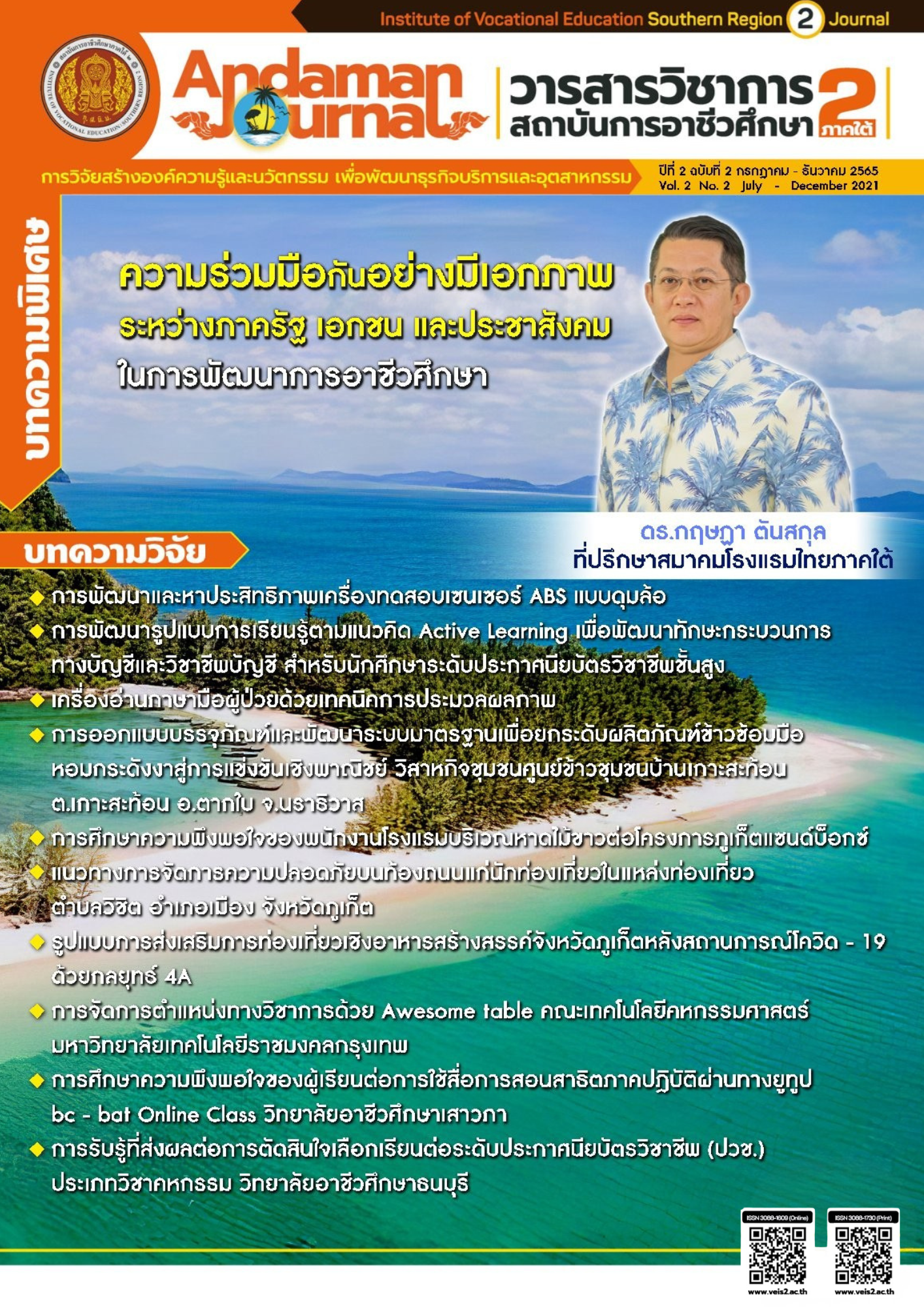
Promoting Gastronomy Tourism in Phuket province after the COVID-19 situation With the 4A strategy
Article Sidebar
Main Article Content
Abstract
This research aims to: 1) create and study the quality of a model for promoting creative food tourism in Phuket Province after the COVID-19 situation, using the 4A strategy; and 2) to study the satisfaction of food business operators with the creative food tourism promotion model in Phuket Province after the COVID-19 situation, using the 4A strategy. This is a mixed-methods research combining qualitative and survey research. Two tools were used: a quality evaluation form for 5 experts and a satisfaction questionnaire for a sample group of 30 restaurant operators, selected through purposive sampling. The research was conducted between June 2021 and April 2022. The statistical methods used to analyze the data included the consistency index, percentage, mean, and standard deviation.
The research results found that experts agreed with the quality of the creative food tourism model (Gastronomy) in Phuket Province after the COVID-19 situation using the 4A strategy, with an IOC of 0.917. The satisfaction of restaurant operators with the model was at a very high level (x̄ = 4.79, S.D. = 0.400). The recommendation from this research is that the 4A strategy can be applied to various restaurants. Each type of restaurant may adjust the strategy or selectively use specific parts that are most suitable for the restaurant’s marketing.
Article Details

This work is licensed under a Creative Commons Attribution-NonCommercial-NoDerivatives 4.0 International License.
This article is published under a Creative Commons Attribution-NonCommercial-NoDerivatives 4.0 International License (CC BY-NC-ND 4.0), which allows others to share the article with proper attribution to the authors and prohibits commercial use or modification. For any other reuse or republication, permission from the journal and the authors is required.References
เทศบาลนครภูเก็ต. (2558). [ออนไลน์]. นครภูเก็ตได้รับประกาศเป็นเมืองสร้างสรรค์ด้านวิทยาการอาหารของยูเนสโก. [สืบค้นเมื่อวันที่ 12 พฤศจิกายน 2564]. จาก https://www.phuketcity.go.th/news/detail/1701
องค์การบริหารการพัฒนาพื้นที่พิเศษเพื่อการท่องเที่ยวอย่างยั่งยืน (องค์การมหาชน). (2559). Gastronomy Tourism การท่องเที่ยวเชิงอาหาร. กรุงเทพมหานคร: โคคูน แอนด์ โค.
เสรี วงษ์มณฑา และชุษณะ เตชคณา. (2560). การตลาด 4.0 ในบริบทประเทศไทย 4.0. วารสารเศรษฐศาสตร์และนโยบายสาธารณะ. ปีที่ 8 ฉบับที่ 15. หน้าที่ 1-16.
Krejcie, R. V. & Morgan, D. W. (1970). Determining Sample Size for Research Activities. Educational and Psychological Measurement, 30(3), pp. 607-610.
Kottler, Philip. (1997). Analysis, Planning, Implementation and Control Marketing. 9th ed. New Jersey: A Simon and Schuster Company.
วิลาวัลย์ อ่อนวงษ์เปรม. (2561). กลยุทธ์การปรับตัวด้านการตลาดเพื่อสร้างการรับรู้คุณค่าอาหารไทยดั้งเดิมของประเทศไทย. วิทยานิพนธ์. กรุงเทพมหานคร: บัณฑิตวิทยาลัย มหาวิทยาลัยสยาม. อัดสำเนา.
วิมลรัตน์ บุญศรีรัตน์. (2561). แนวทางการจัดการมาตรฐานอาหารเพื่อการท่องเที่ยวในจังหวัดภูเก็ต. วิทยานิพนธ์. กรุงเทพมหานคร: สถาบันบัณฑิตพัฒนบริหารศาสตร์. อัดสำเนา.
กรมส่งเสริมวัฒนธรรม กระทรวงวัฒนธรรม. (ม.ป.ป.-b). อาหารเมืองภูเก็ต. สำนักงานกิจการโรงพิมพ์ องค์การสงเคราะห์ทหารผ่านศึกฯ.
ศุภร เสรีรัตน์. (2544). พฤติกรรมผู้บริโภค. กรุงเทพมหานคร: ด่านสุทธาการพิมพ์.
นิธิยา เพชรหยอย. (2562). กลยุทธ์และการสร้างมูลค่าเพิ่มของผู้ประกอบการร้านอาหารเพื่อสุขภาพ กรณีศึกษาร้านโพเมโล่โฮม. วิทยานิพนธ์. กรุงเทพมหานคร: มหาวิทยาลัยศิลปากร. อัดสำเนา.
McCarthy, E. Jerome and William D. Perreault, Jr. (1995). Essentials of Marketing. Illinois: Richard D. Irwin, Inc.
ณฐาพัชร์ วรพงศ์พัชร์, รุ่งทิวา ชูทอง, ศิริวัฒน์ เปลี่ยนบางยาง และเอกศิริ นิยมศิลปะ. (2563). แนวทางพัฒนาการตลาดดิจิทัลสำหรับกลุ่มวิสาหกิจชุมชนบ้านโฉนด ชุมชนคลองโยง-ลานตากฟ้า จังหวัดนครปฐม. วารสารการบริหารนิติบุคคลและนวัตกรรมท้องถิ่น ปีที่ 6 ฉบับที่ 2. หน้า 115-127.
