
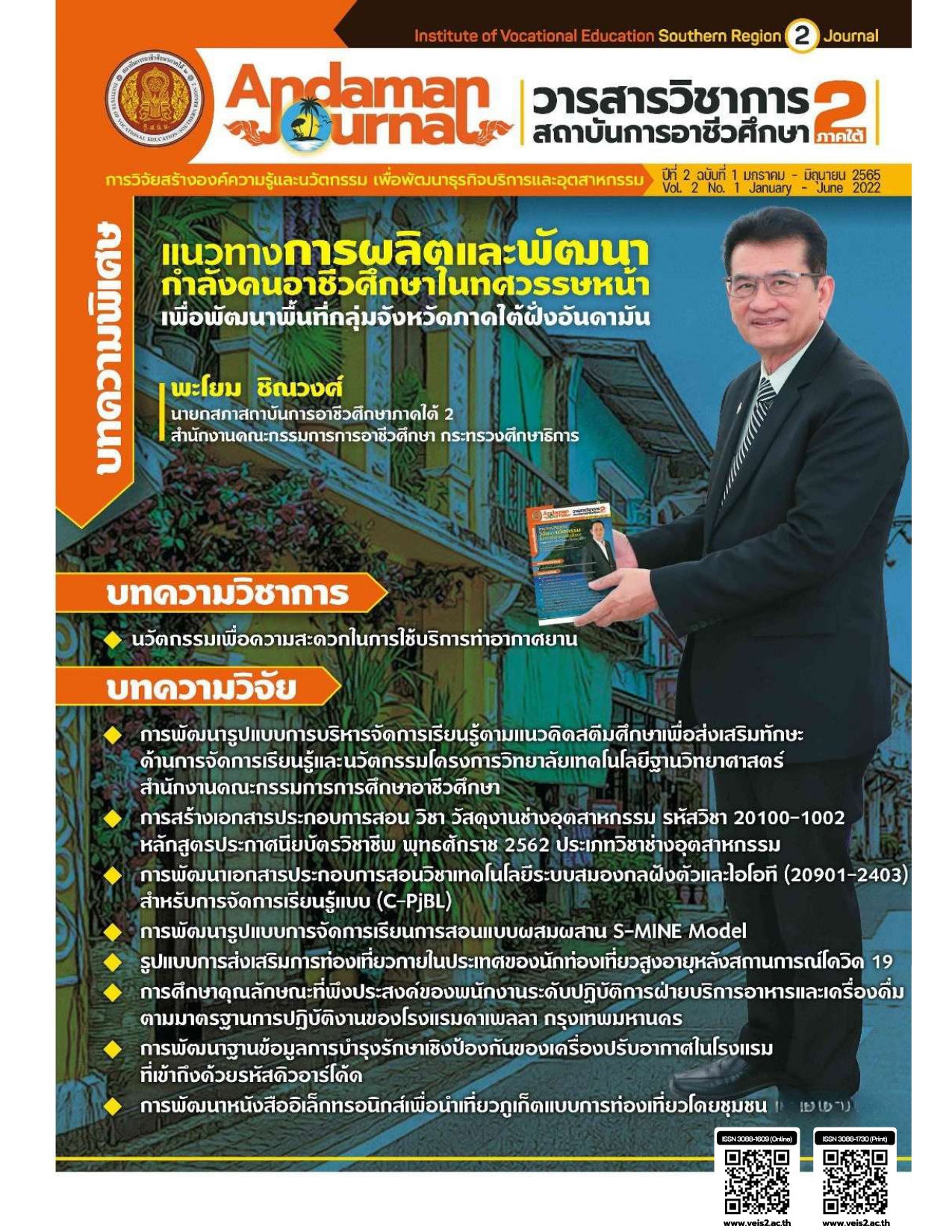
Domestic Tourism Promotion Model for the Elderly Tourists after COVID-19 Situation
Article Sidebar
Main Article Content
Abstract
The objectives of this research were to: 1) study factors that support and promote domestic tourism among elderly tourists after the COVID-19 situation and 2) develop a model for promoting domestic tourism among elderly tourists after the COVID-19 situation. The research has been designed as a mixed method study of quantitative and qualitative research. The population and sample group included tourism stakeholders in the government sector and business sector, qualified academic experts, and elderly tourists in Phuket Province. The sample size of the tourists was determined based on Taro Yamane's calculation of 100 participants derived by random sampling and quota sampling. The research tools included questionnaires, structured interviews, satisfaction assessment form, and questions in group discussions. The data analysis was conducted through content analysis and statistical calculations with a ready-made program of mean and standard deviation.
The results of the research showed that: 1) factors supporting and promoting domestic tourism among elderly tourists after the COVID-19 situation consisted of a tourism recovery strategy, marketing perspective factors in the marketing mix, and promoting domestic tourism in various forms. 2) The model for promoting domestic tourism for elderly tourists after the COVID-19 situation consisted of tourism recovery strategies for elderly tourists (5R), perspectives on 4C's Market, 7P's marketing mix factors, and promoting domestic tourism in various forms (10Go).
Article Details

This work is licensed under a Creative Commons Attribution-NonCommercial-NoDerivatives 4.0 International License.
This article is published under a Creative Commons Attribution-NonCommercial-NoDerivatives 4.0 International License (CC BY-NC-ND 4.0), which allows others to share the article with proper attribution to the authors and prohibits commercial use or modification. For any other reuse or republication, permission from the journal and the authors is required.References
สำนักงานบริหารและพัฒนาองค์ความรู้. (องค์การมหาชน). (2559). [ออนไลน์]. Aging Society ก้าวสู่สังคมสูงวัย ไอเดียดี โอกาสมา. [สืบค้นเมื่อวันที่ 8 ธันวาคม 2564]. จาก https://www.okmd.or.th/okmd-opportunity/aging-society/260/
สำนักงานสถิติแห่งชาติ. (2560). [ออนไลน์]. การสำรวจประชากรสูงอายุ. [สืบค้นเมื่อวันที่ 8 ธันวาคม 2564]. จาก https://nsodw.nso.go.th/dwportal/Item.aspx?p=+ssaDsQv4TQFrLJCEbyvEQ==.
นรินทร์ ส่งชูชีพ. (2559). รูปแบบและพฤติกรรมการท่องเที่ยวที่ไร้ความเร่งรีบของนักท่องเที่ยวผู้สูงอายุในภูมิภาคตะวันตก. วารสารวิชาการ มหาวิทยาลัยหอการค้าไทย ปีที่ 36 ฉบับที่ 2. หน้า 1-19.
สมยศ วัฒนากมลชัย และเยาวลักษณ์ ยิ้มอ่อน. (2557). นักท่องเที่ยวสูงอายุกลุ่มเป้าหมายที่มีศักยภาพสำหรับธุรกิจการท่องเที่ยว. วารสารปัญญาภิวัฒน์ มหาวิทยาลัยกรุงเทพ. ปีที่ 1 ฉบับที่ 2. หน้า 95-103.
สำนักงานสภานโยบายการอุดมศึกษา วิทยาศาสตร์ วิจัยและนวัตกรรมแห่งชาติ (สอวช.). (2564). [ออนไลน์]. แนวทางฟื้นฟูเศรษฐกิจและสังคมของประเทศหลังวิกฤติการณ์โควิด-19. [สืบค้นเมื่อวันที่ 8 ธันวาคม 2564]. จาก https://www.nxpo.or.th/th/4815/
Greed is goods. (2560). [ออนไลน์]. Marketingmix 7Ps. [สืบค้นวันที่ 8 ธันวาคม 2564]. จาก https://greedisgoods.com/7p%E0%B8%84%E0%B8%B7%E0%B8%AD/
Creta ex house. (2560). [ออนไลน์]. หลัก 4Cs มองการตลาดมุมใหม่. [สืบค้นเมื่อวันที่ 8 ธันวาคม 2564]. จาก https://www.createxhouse.com/หลัก-4cs-มองการตลาดมุมใหม่/
พระชัยภัค ชยเมธี. (2564). นโยบายทางการเมืองในการส่งเสริมการท่องเที่ยวขององค์กรปกครองส่วนท้องถิ่นรอบบึงแก่นนคร จังหวัดขอนแก่น. วิทยานิพนธ์, มหาวิทยาลัยมหาจุฬาลงกรณราชวิทยาลัย วิทยาเขตขอนแก่น.
ธีรี ตีระจินดา. (2555). การส่งเสริมการท่องเที่ยวสำหรับนักท่องเที่ยวผู้สูงอายุตลาดญี่ปุ่นสู่ประเทศไทย. วิทยานิพนธ์ (วท.ม.). จุฬาลงกรณ์มหาวิทยาลัย.
ชัชพล ทรงสุนทรวงศ์. (2563). โมเดลคุณค่าประสบการณ์การท่องเที่ยวของนักท่องเที่ยวผู้สูงอายุชาวไทย. วารสารอิเล็กทรอนิกส์การเรียนรู้ทางไกลเชิงนวัตกรรม. ปีที่ 10 ฉบับที่ 2. หน้า 189-207.
ลัดดา ศรีอัมพรเอกกุล. (2561). การท่องเที่ยวคุณภาพเพื่อนักท่องเที่ยวผู้สูงอายุ. บทความวิชาการ วารสารมนุษยศาสตร์และสังคมศาสตร์ มหาวิทยาลัยราชพฤกษ์. ปีที่ 4 ฉบับที่ 1. หน้า 12-28.
