
Using Buddhist Principles to Heal Patients with Depression
Article Sidebar
Main Article Content
Abstract
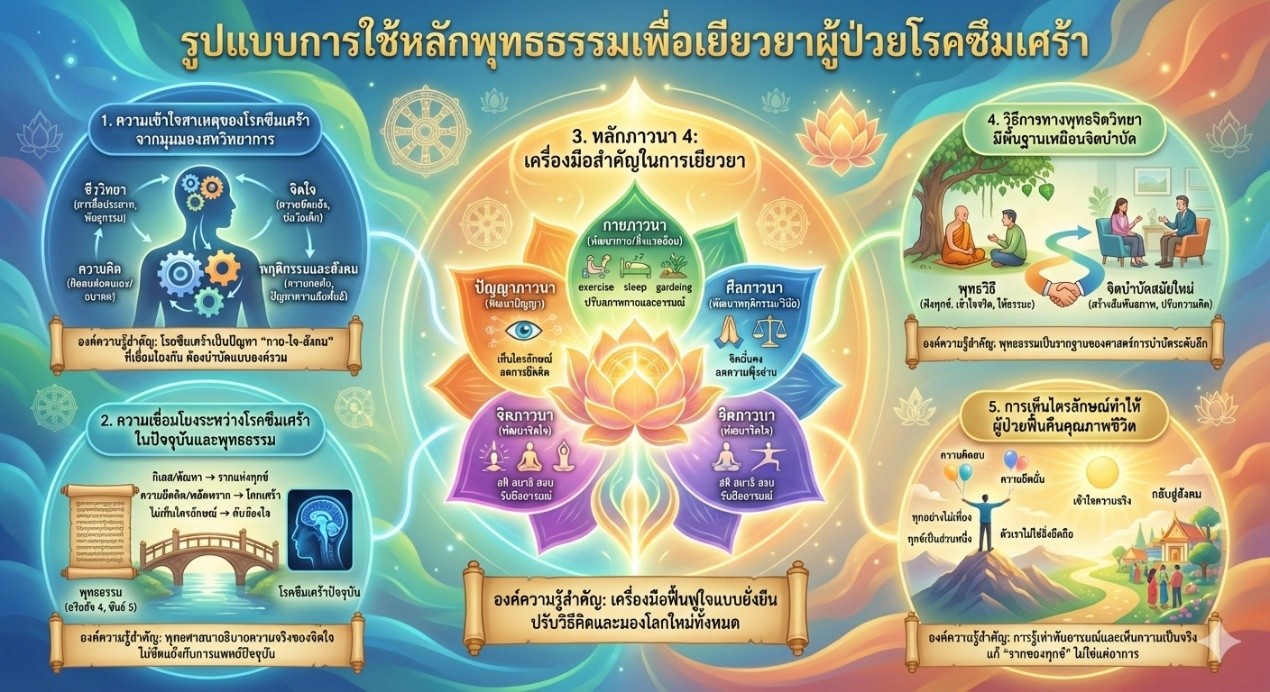
This research paper aims to analyze the problem of depression and imply Buddhist principles related to treating the depression. This research was qualitative research consisting of documentary work using descriptive analysis method.
Its results found that depression problem is basically caused by an abnormality of brain function in a part affecting to thoughts, emotions, feelings, behavior, and physical health. Depression is type of symptom or altered state of mind, caused by disappointment, or having suffered emotional damage such as bad of economic and financial conditions, disappointment, broken relationships, love, and loss, which can be treated or resolved with encouragement. However, if problems cannot be dealt with, it might cause the rise of stress and anxiety and finally serious depression, the depressed one may harm himself even committing suicide. The Buddhist teachings which can treat this depression including 4 Bhāvanā with mindfulness on control and directing the mind, while perceiving, to be with what is happening in the present moment which are actually happening and existing, namely: 1) Kāyabhāvanā or development or training the physical body, the development of the physical environment for better quality of life, such as jogging, sleeping, drawing, reading, singing, watering plants, doing religious activities, praying, listening to sermons and Dhamma talks, having close friends, playing with dogs, getting massages, eating nutritious food, 2) Sīlabhāvanā or behavioral development, morality following, discipline such as not killing animals, not breaking the law, following the rules of society, 3) Cittabhāvanā or mental development referring to mind training, such as husbandry, painting or making art, yoga practicing, 4) Paññābhāvanā or wisdom development, wisdom training for better thinking, analysis, observing, problems solving, performing various actions with wisdom such as meditating, walking, Dhamma practice, participating in social activities, reading, and carrying out various activities by applying the 4 Bhāvanā principles to heal the depression so that the patients can control their negative emotions and being aware of whatever are arising such as greed, anger, and delusion. By this way, the depressed one will recover from the symptoms for better condition and live in society with others.
Article Details

This work is licensed under a Creative Commons Attribution-NonCommercial-NoDerivatives 4.0 International License.
The content and information in articles published in Navangkasatthasāsana Review represent solely the opinions and responsibility of the authors. The editorial board of the journal is not required to agree with, nor does it share responsibility for, any part of the articles.
All articles, data, content, images, and other materials published in Navangkasatthasāsana Review are the copyright of the journal. Any individual or organization wishing to reproduce, distribute, or otherwise use all or any part of such materials must obtain prior written permission from Navangkasatthasāsana Review.
References
ถนอมศรี อินทนนท์. แผนการพยาบาลผู้ป่วยจิตเวช. (นครศรีธรรมราช: พี.เจ.เพลท.โปรเซสเซอร์. 2536).
ธนิต อยู่โพธิ์. วิปัสสนาภาวนา. พิมพ์ครั้งที่ 2. (กรุงเทพมหานคร: โรงพิมพ์มหาจุฬาลงกรณราช วิทยาลัย. 2547).
บุญศิริ จันศิริมงคล. ภาวะโรคร่วมทางจิตเวชในผู้ป่วยที่ปัญหาการดื่มสุรา. (กรุงเทพมหานคร: ศิลักษ์พริ้นติ้ง. 2555).
พระภาวนาพิศาลเมธี วิ. เอกสารประกอบการสอนรายวิชาสติปัฏฐานภาวนา. (บัณฑิตวิทยาลัย: มหาวิทยาลัยมหาจุฬาลงกรณราชวิทยาลัย. 2555).
มหาวิทยาลัยมหาจุฬาลงกรณราชวิทยาลัย. พระไตรปิฎกภาษาบาลี ฉบับมหาจุฬาเตปิฏกํ 2500.กรุงเทพมหานคร: โรงพิมพ์มหาวิทยาลัยมหาจุฬาลงกรณราชวิทยาลัย, 2535.
มหาวิทยาลัยสุโขทัยธรรมาธิราช. เอกสารการสอนชุดวิชาการส่งเสริมสุขภาพจิตและการ พยาบาลจิตเวช. พิมพ์ครั้งที่ 8. (นนทบุรี: สำนักพิมพ์มหาวิทยาลัยสุโขทัยธรรมาธิราช. 2552).
สมพร บุษราทิจ. ศิริรัตน์ คุปติวุฒิ. จิตเวชปฏิบัติ. (กรุงเทพมหานคร: โรงพิมพ์เรือนแก้วการพิมพ์. 2540).
อัจฉราพร สี่หิรัญวงศ์ และคณะ. การพยาบาลจิตเวชศาสตร์. (นครปฐม: พิมพ์ลักษณ์. 2557).
อุมาพร ตรังคสมบัติ. สร้างสมาธิให้ลูกคุณ. (กรุงเทพมหานคร: ซันต้าการพิมพ์. 2553).
