
BUDDHISM FOR THE PSYCHOLOGICAL DEVELOPMENT OF LEARNERS IN CONTEMPORARY SOCIETY
Keywords:
Buddhism, mental development, learners, learning management, mindfulnessAbstract
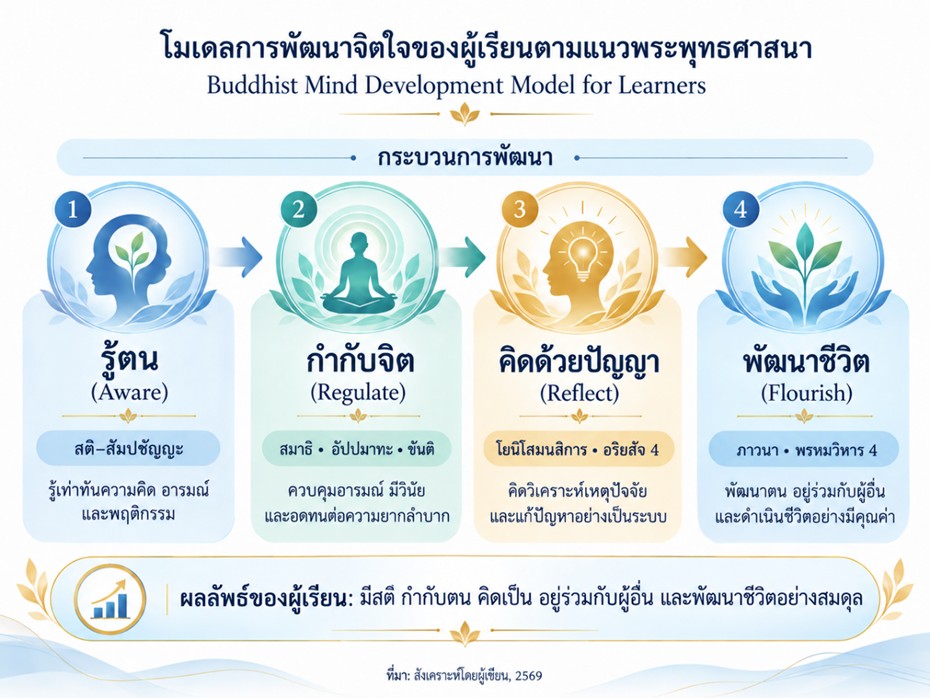
This academic article aims to analyze the psychological challenges faced by learners in contemporary society, examine Buddhist principles applicable to learners’ mental development, and synthesize approaches for integrating Buddhism into the learning process. The discussion is situated within the contexts of digital transformation, educational competition, family and social expectations, and the mental health concerns of Thai children and adolescents. Major challenges identified include lack of mindfulness and concentration, stress and anxiety, difficulties in emotional regulation, weakened interpersonal relationships, social comparison, limited resilience toward failure and change, and a lack of purpose or meaning in life. Relevant Buddhist principles include mindfulness and clear comprehension, heedfulness, patience, the Four Brahmavihāras, wise reflection, and the Four Noble Truths. These principles can be translated into educational practices through mindfulness exercises, reflective learning, case-based ethical analysis, moral dialogue, volunteer activities, and self-reflective learning journals. The article further proposes a new conceptual framework entitled the Buddhist Mind Development Model for Learners, consisting of four interrelated stages: Aware, Regulate, Reflect, and Flourish. The model emphasizes a shift from teaching Buddhism as doctrinal content for memorization toward experiential and practice-based learning. Such an approach may help learners develop mindfulness, self-regulation, wisdom-based thinking, compassionate relationships, and the capacity to live meaningfully and adaptively in contemporary society.
References
กรมสุขภาพจิต. (2569). Mental Health Check-in: ตรวจสุขภาพใจออนไลน์. https://checkin.dmh.go.th/
จิตตินันท์ บุญสถิรกุล, และคาลอส บุญสุภา. (2567). การพัฒนากรอบความคิดแบบเติบโตเพื่อเพิ่มความยืดหยุ่นทางจิตใจเมื่อเผชิญปัญหา. วารสารสันติศึกษาปริทรรศน์ มจร, 12(3), 1230–1240. https://so03.tci-thaijo.org/index.php/journal-peace/article/view/271761
ณัฐสันต์ แก้วโสวัฒนะ, และพระมหาหรรษา ธมฺมหาโส. (2564). การพัฒนากระบวนการเรียนรู้ที่มีสติเป็นฐาน ศึกษากรณี: นักเรียนระดับชั้นประถมศึกษาตอนปลาย โรงเรียนบ้านท่าคอยนาง จังหวัดศรีษะเกษ. วารสารสันติศึกษาปริทรรศน์ มจร, 9(3), 1015–1027. https://so03.tci-thaijo.org/index.php/journal-peace/article/view/249564
พิชชานันท์ มหันตกาสี, และณัฏฐภรณ์ หลาวทอง. (2568). การพัฒนาวิธีการประเมินตนเองเพื่อพัฒนาทักษะการปฏิบัติเครื่องเป่าไทยของนักเรียนชั้นมัธยมศึกษา: การประยุกต์ใช้แนวคิดการประเมินเป็นการเรียนรู้ด้วยการสะท้อนคิดจากการบันทึกวิดีโอเพื่อให้ข้อมูลย้อนกลับ. วารสารการวัด ประเมินผล สถิติ และการวิจัยทางสังคมศาสตร์, 6(1), 39–55. https://so03.tci-thaijo.org/index.php/mesr/article/view/278880
พรพิมล วิญญา, มนัสนันท์ หัตถศักดิ์, และกรกฎา นักคิ้ม. (2568). ปัจจัยที่ส่งผลต่อความเห็นอกเห็นใจผู้อื่นของนักเรียนชั้นมัธยมศึกษาปีที่ 3 โรงเรียนสระบุรีวิทยาคม. วารสารสหศาสตร์การพัฒนาสังคม, 3(4), 486–501. https://so12.tci-thaijo.org/index.php/JISDIADP/article/view/3413
พระครูวิลาศกาญจนธรรม, และแม่ชีกุลภรณ์ แก้ววิลัย. (2565). การพัฒนาจิตอาสาตามแนวทางพระพุทธศาสนา. วารสาร มจร กาญจนปริทรรศน์, 2(2), 117–126. https://so05.tci-thaijo.org/index.php/Kanchana-editor/article/view/254655
ภาณุมาศ อักโข, ไพรินทร์ กึกก้อง, พิมพกานต์ หารลำยอง, พิรญาณ์ ดอกจันทร์รี, ภควดี โสธรรมมงคล, ภัทรวรรณ ครองยุทธ, ภุมรินทร์ ฐานะ, และอัจฉรา คำมะทิตย์. (2567). ปัจจัยที่มีความสัมพันธ์ต่อภาวะบีบคั้นทางจิตใจของวัยรุ่นไทยในสถานการณ์โควิด 19 ในระยะเตรียมการปรับเป็นโรคประจำถิ่น. วารสารวิจัยนวัตกรรมและหลักฐานเชิงประจักษ์ทางสุขภาพ, 2(1), 35–45. https://he03.tci-thaijo.org/index.php/PBRI/article/view/1519
มหาจุฬาลงกรณราชวิทยาลัย. (2539). พระไตรปิฎกภาษาไทย ฉบับมหาจุฬาลงกรณราชวิทยาลัย. โรงพิมพ์มหาจุฬาลงกรณราชวิทยาลัย.
ลลิตา เลี่ยมประวัติ, และลำไย สีหามาตย์. (2567). การพัฒนาสื่อหนังสือภาพเพื่อเสริมสร้างความเข้าใจเรื่องการเหยียดรูปลักษณ์และความเห็นอกเห็นใจสำหรับเด็กประถมศึกษาในช่วงอายุ 10–12 ปี. วารสาร มจร อุบลปริทรรศน์, 9(1). https://so06.tci-thaijo.org/index.php/mcjou/article/view/272618
วีรสิทธิ์ ประกอบศรี, และภาวิณี ศรีสุขวัฒนานันท์. (2564). การพัฒนาการกำกับอารมณ์ตนเองของนักเรียนออทิสติกโดยประยุกต์หลักสูตรโซน. วารสารวิจัยและพัฒนาการศึกษาพิเศษ, 10(2), 53–68. https://ejournals.swu.ac.th/index.php/rise/article/view/13734
วรัญญู กองชัยมงคล. (2567). ความสัมพันธ์ระหว่างความนิยมความสมบูรณ์แบบกับสุขภาวะเชิงอัตวิสัยในนิสิตนักศึกษามหาวิทยาลัย โดยมีความเมตตากรุณาต่อตนเองเป็นตัวแปรส่งผ่าน. วารสารจิตวิทยาคลินิกไทย (Online), 55(1), 14–26. https://so03.tci-thaijo.org/index.php/tci-thaijclinicpsy/article/view/273322
สถาบันราชานุกูล กรมสุขภาพจิต. (2567). แผนปฏิบัติการพัฒนาระบบและบริการสุขภาพจิตเด็กและเยาวชนอย่างบูรณาการ (พ.ศ. 2566–2570). กรมสุขภาพจิต กระทรวงสาธารณสุข.
สมเจตน์ ผิวทองงาม. (2566). การเรียนรู้ในพระพุทธศาสนา: ทฤษฎีและการนำไปประยุกต์ใช้. วารสารสมาคมพัฒนาวิชาชีพการบริหารการศึกษาแห่งประเทศไทย (สพบท.), 5(4), 246–263. https://so04.tci-thaijo.org/index.php/JAPDEAT/article/view/267609
สวรรยา นามพรหม. (2567). การพัฒนาทักษะการคิดวิเคราะห์และผลสัมฤทธิ์ทางการเรียนโดยใช้รูปแบบการจัดการเรียนรู้ผ่านการสะท้อนคิด (Reflective Teaching) ในรายวิชาสังคมศึกษา. Journal of Applied Education, 2(6), 1–12. https://so16.tci-thaijo.org/index.php/JAE/article/view/1206
อิศรา รุ่งทวีชัย, ดลดาว ปูรณานนท์, และชมพูนุท ศรีจันทร์นิล. (2562). การศึกษาความหมายในชีวิตเชิงประสบการณ์ของนักศึกษาระดับปริญญาตรี คณะครุศาสตร์. มหาจุฬาวิชาการ, 6(ฉบับพิเศษ), 85–99. https://so04.tci-thaijo.org/index.php/JMA/article/view/148824
โรงพยาบาลสุรินทร์. (2567). ผลการดำเนินงาน Green Clinic โรงพยาบาลสุรินทร์: พัฒนาระบบดูแลสุขภาพจิตแบบองค์รวมในสถานศึกษา. ใน ผลงานวิชาการ Best Practice กระทรวงสาธารณสุข. กระทรวงสาธารณสุข.
UNICEF Thailand. (2022). Strengthening mental health and psychosocial support systems and services for children and adolescents in East Asia and Pacific region: Thailand country report.
UNICEF Thailand. (2024). The costs and benefits of mental health and psychosocial support for children and adolescents in education settings in Thailand. https://www.unicef.org/thailand/reports/benefits-investing-school-based-mental-health-support
Downloads
Published
How to Cite
Issue
Section
License
Copyright (c) 2026 Journal of Contemporary Buddhist Society = JCBS

This work is licensed under a Creative Commons Attribution-NonCommercial-NoDerivatives 4.0 International License.



