A Study of Happiness from Vipassana Meditation Practitioners
Article Sidebar
Main Article Content
Abstract
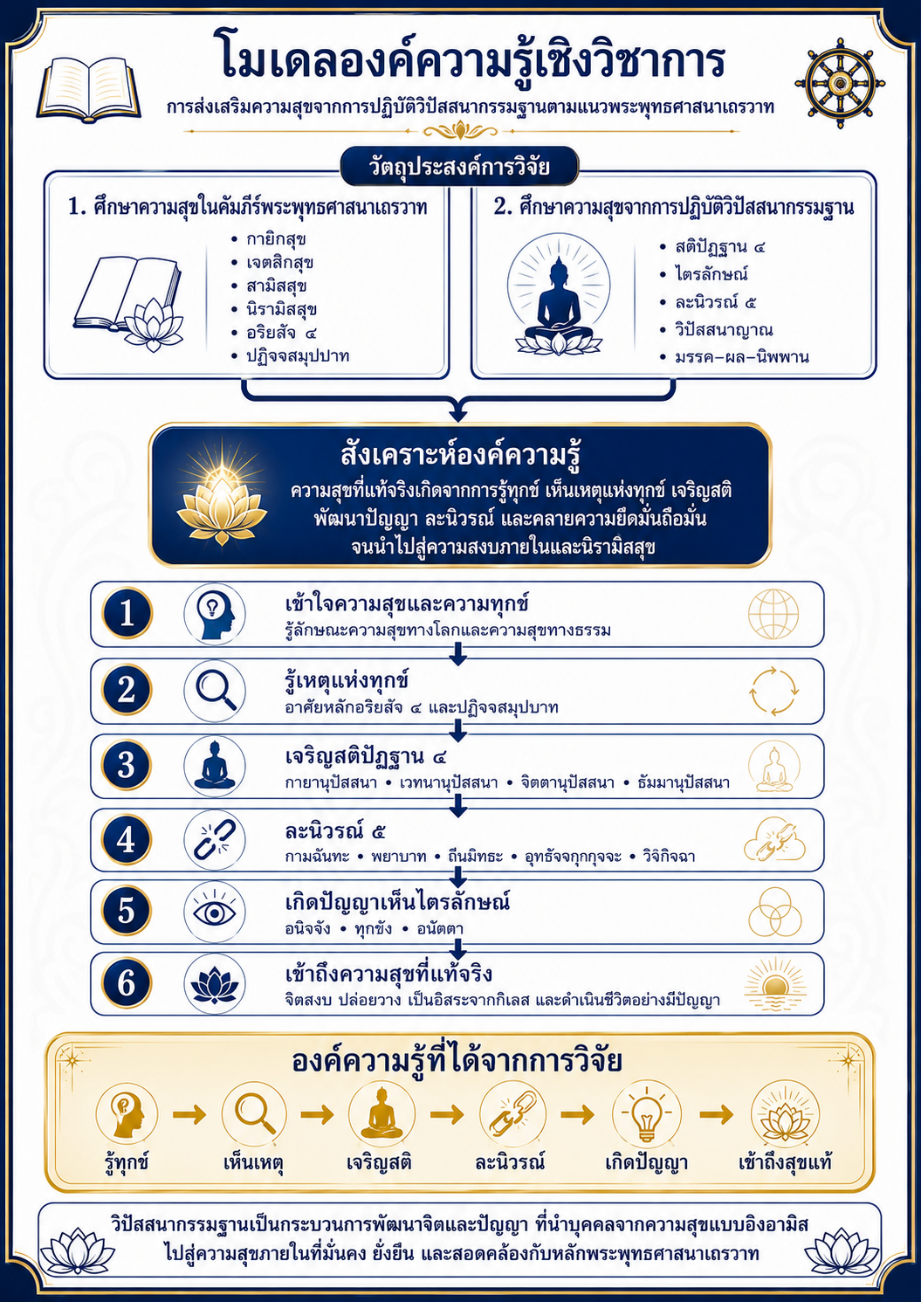
This research has 2 objectives : 1) the concept of happiness in Theravāda Buddhist cannon, and 2) the happiness derived from the practice of Vipassanā meditation of practitioner. The study is documentary type, based on an analysis of sources including Tipiṭaka, commentaries, sub-commentaries, Visuddhimagga, as well as Buddhist books, articles, and other relevant documents. The collected data were compiled and presented in a descriptive manner.
The findings were that happiness or Sukkha in Theravāda Buddhism is the aim of everyone while common life involves with both happiness and suffering. True happiness is categorized as physical (Kāyika-sukha) and mental (Cetasika-sukha). Other happiness classified by factors includes Sāmissukkha or happiness with objects and Nirāmisasukha or happiness without objects. The core teachings of the Four Noble Truths and Paṭiccasamuppāda explain the arising of suffering due to ignorance and its cessation through realization abandoning of Five Hindrances; sensual pleasure, ill-will, sloth, mental distractions, and doubt, which are the barrier of wisdom progress. Vipassanā meditation refers to insight training for realizing the true state of all phenomena through the Four Foundations of Mindfulness which enables to reach Vipassanāñāṇa abandoning desire and defilements, and gaining lasting happiness and Nibbāna. True happiness arises from a liberated mind from defilements and craving which can be obtained only through continually following insight training and meditation.
Article Details

This work is licensed under a Creative Commons Attribution-NonCommercial-NoDerivatives 4.0 International License.
The content and information in articles published in Navangkasatthasāsana Review represent solely the opinions and responsibility of the authors. The editorial board of the journal is not required to agree with, nor does it share responsibility for, any part of the articles.
All articles, data, content, images, and other materials published in Navangkasatthasāsana Review are the copyright of the journal. Any individual or organization wishing to reproduce, distribute, or otherwise use all or any part of such materials must obtain prior written permission from Navangkasatthasāsana Review.
References
พระธรรมธีรราชมหามุนี (โชดก ญาณสิทฺธิ). หลักปฏิบัติสมถะและวิปัสสนากรรมฐาน. พิมพ์ครั้งที่ 6. กรุงเทพมหานคร: โรงพิมพ์สหธรรมิก, 2546.
พระธรรมธีรราชมหามุนี (โชดก ญาณสิทฺธิ). หลักปฏิบัติสมถะและวิปัสสนากรรมฐาน. พิมพ์ครั้งที่ 5. กรุงเทพมหานคร: โรงพิมพ์มหาจุฬาลงกรณราชวิทยาลัย, 2557.
พระธรรมปิฎก (ป.อ. ปยุตฺโต). พุทธธรรม ฉบับปรับขยาย. กรุงเทพมหานคร: โรงพิมพ์มหาจุฬาลงกรณราชวิทยาลัย, 2546.
พระพรหมคุณาภรณ์ (ป.อ. ปยุตฺโต). พจนานุกรมพุทธศาสตร์ ฉบับประมวลธรรม. พิมพ์ครั้งที่ 34. กรุงเทพมหานคร: สำนักพิมพ์ผลิธัมม์, 2559.
พระพุทธโฆสาจารย์. คัมภีร์วิสุทธิมรรค. แปลและเรียบเรียงโดย สมเด็จพระพุฒาจารย์ (อาจ อาสภมหาเถร). พิมพ์ครั้งที่ 4. กรุงเทพมหานคร: วัดมหาธาตุยุวราชรังสฤษฎิ์, 2546.
พระราชสิทธิมุนี (โชดก ญาณสิทฺธิ). หลักปฏิบัติสมถะและวิปัสสนากรรมฐาน. กรุงเทพมหานคร: โรงพิมพ์มหาจุฬาลงกรณราชวิทยาลัย, 2548.
พระโสภณมหาเถระ (มหาสีสยาดอ). วิปัสสนานัย เล่ม 1. แปลโดย พระคันธสาราภิวงศ์. กรุงเทพมหานคร: ห้างหุ้นส่วนจำกัด ประยูรสาส์นไทย การพิมพ์, 2554.
มหาจุฬาลงกรณราชวิทยาลัย. พระไตรปิฎกภาษาไทย ฉบับมหาจุฬาลงกรณราชวิทยาลัย. กรุงเทพมหานคร: โรงพิมพ์มหาจุฬาลงกรณราชวิทยาลัย, 2539.
สมเด็จพระพุทธโฆษาจารย์ (ป.อ. ปยุตฺโต). พุทธธรรม ฉบับปรับขยาย. กรุงเทพมหานคร: โรงพิมพ์มหาจุฬาลงกรณราชวิทยาลัย, 2553.
