An Analysis of Sekhiyavatta Principle to Enhance Thai Etiquette Values
Article Sidebar
Main Article Content
Abstract
This research has 2 objectives : 1) to study the Sekhiyavatta in the scriptures of Theravāda Buddhism. and 2) to analyze the Sekhiyavatta for promote the values of Thai etiquette. This was a qualitative study with a focus on documentary research.
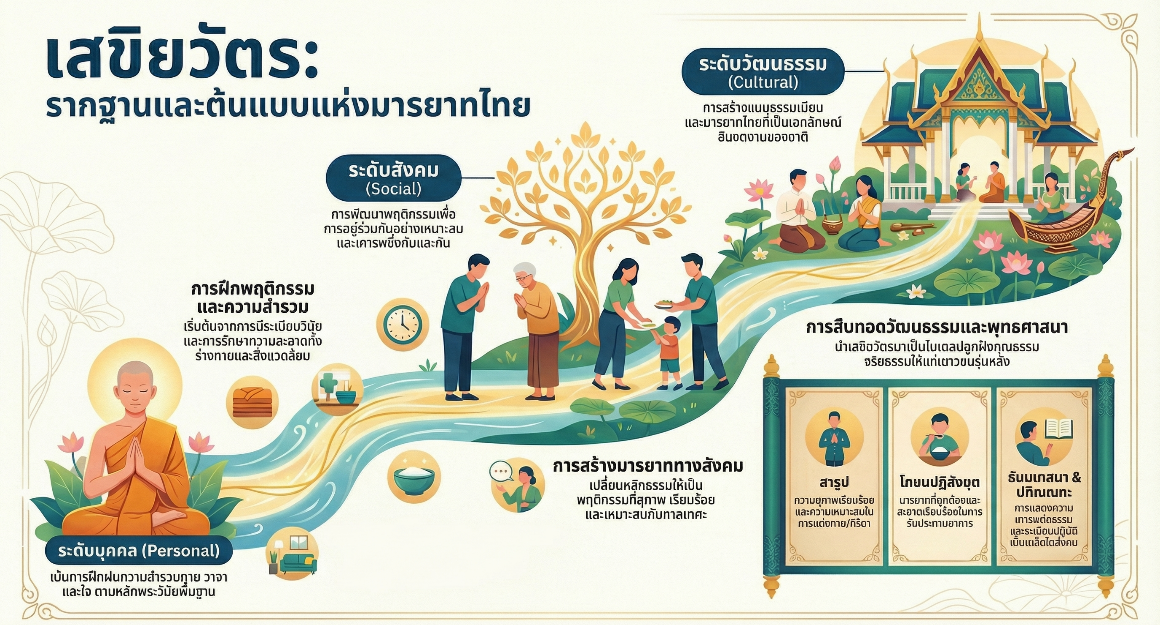
Research findings were that Sekhiyavatta refers to monastic etiquette guidelines that Buddhist monks must study and observe. They are divided into four categories: 1) Sārūpa or proper conduct – 26 rules as the guidelines on monks’ proper behavior when entering villages. including rules on dressing appropriately. maintaining composure. and speaking properly. 2) Bhojana-paṭisaṁyutta or Eating Etiquette – 30 rules: Proper conduct related to receiving alms and consuming food. 3) Dhammadesanāpaṭisaṁyutta or preaching etiquette – 16 rules: Rules regarding monks’ conduct when delivering Dhamma teachings. 4) Pakinnaka or Miscellaneous – 3 rules: Guidelines for proper behavior concerning defecation. urination. and spitting in public places. Violating these rules results in an offense called Dukkata-āpatti. Analysis of the Sekhiyavatta in promoting Thai etiquette was applied to enhance Thai manners in four key aspects: 1) Sārūpa section and Thai etiquette – 26 rules: These rules form the foundation of Thai manners. emphasizing proper dressing. bodily composure. and respectful speech to facilitate social integration and acceptance. 2) Bhojana-paṭisaṁyutta section and Thai etiquette – 30 rules: These rules regulate monks’ eating behavior and have influenced traditional Thai dining etiquette. shaping respectful and orderly eating practices. 3) Dhamma-desanā-paṭisaṁyutta and Thai etiquette – 16 rules: These rules ensure that monks uphold respect and reverence for the Dhamma and maintain a dignified presence while delivering teachings. thereby enhancing their credibility and influence. 4) Pakinnaka and Thai etiquette – 3 rules: These rules emphasize maintaining cleanliness and environmental responsibility regarding bodily waste disposal. aligning with public health. sanitation. and environmental conservation principles.
Article Details

This work is licensed under a Creative Commons Attribution-NonCommercial-NoDerivatives 4.0 International License.
The content and information in articles published in Navangkasatthasāsana Review represent solely the opinions and responsibility of the authors. The editorial board of the journal is not required to agree with, nor does it share responsibility for, any part of the articles.
All articles, data, content, images, and other materials published in Navangkasatthasāsana Review are the copyright of the journal. Any individual or organization wishing to reproduce, distribute, or otherwise use all or any part of such materials must obtain prior written permission from Navangkasatthasāsana Review.
References
ทิพวรรณ หอมพูล. มารยาทและการสมาคม. กรุงเทพมหานคร: วังอักษร, 2538.
พระธรรมปิฎก (ป.อ. ปยุตฺโต). พจนานุกรมพุทธศาสตร์ ฉบับประมวลธรรม. พิมพ์ครั้งที่ 11. กรุงเทพมหานคร: บริษัท สหธรรมิก จำกัด, 2545.
พระพรหมคุณาภรณ์ (ป.อ. ปยุตฺโต). พจนานุกรมพุทธศาสน์ ฉบับประมวลศัพท์. พิมพ์ครั้งที่ 28. กรุงเทพมหานคร: สำนักพิมพ์ผลิธัมม์, 2559.
________. พระวินัย: เรื่องใหญ่กว่าที่คิด. กรุงเทพมหานคร: โรงพิมพ์มหาจุฬาลงกรณราชวิทยาลัย, 2553.
พระมหาหรรษา ธมฺมหาโส. พระพุทธศาสนากับการพัฒนาสังคม. กรุงเทพมหานคร: มหาจุฬาลงกรณราชวิทยาลัย, 2558.
พระเมธีธรรมาภรณ์ (ประยูร ธมฺมจิตฺโต). พระพุทธศาสนากับสังคมไทย. กรุงเทพมหานคร: มหาจุฬาลงกรณราชวิทยาลัย, 2552.
มหาวิทยาลัยมหาจุฬาลงกรณราชวิทยาลัย. พระไตรปิฎกภาษาไทย พระวินัยปิฎก มหาวิภงค์ เล่มที่ 2. กรุงเทพมหานคร: โรงพิมพ์มหาจุฬาลงกรณราชวิทยาลัย, 2551.
สมจินตนา ภักดิ์ศรีวงศ์. มารยาทในสังคมไทย. กรุงเทพมหานคร: ต้นอ้อ แกรมมี่, 2538.
