An Analysis of Pañcadhamma to Support Ethical Conducts in Accordance with the Five Precepts
Article Sidebar
Main Article Content
Abstract
This research has 2 objectives 1) to study the Pañcadhamma in the scriptures of Theravāda Buddhism, and 2) to analyze the Pañcadhamma to support ethical conducts in accordance with the Five Precepts or Pañcasīla. This is a qualitative study with a focus on documentary research.
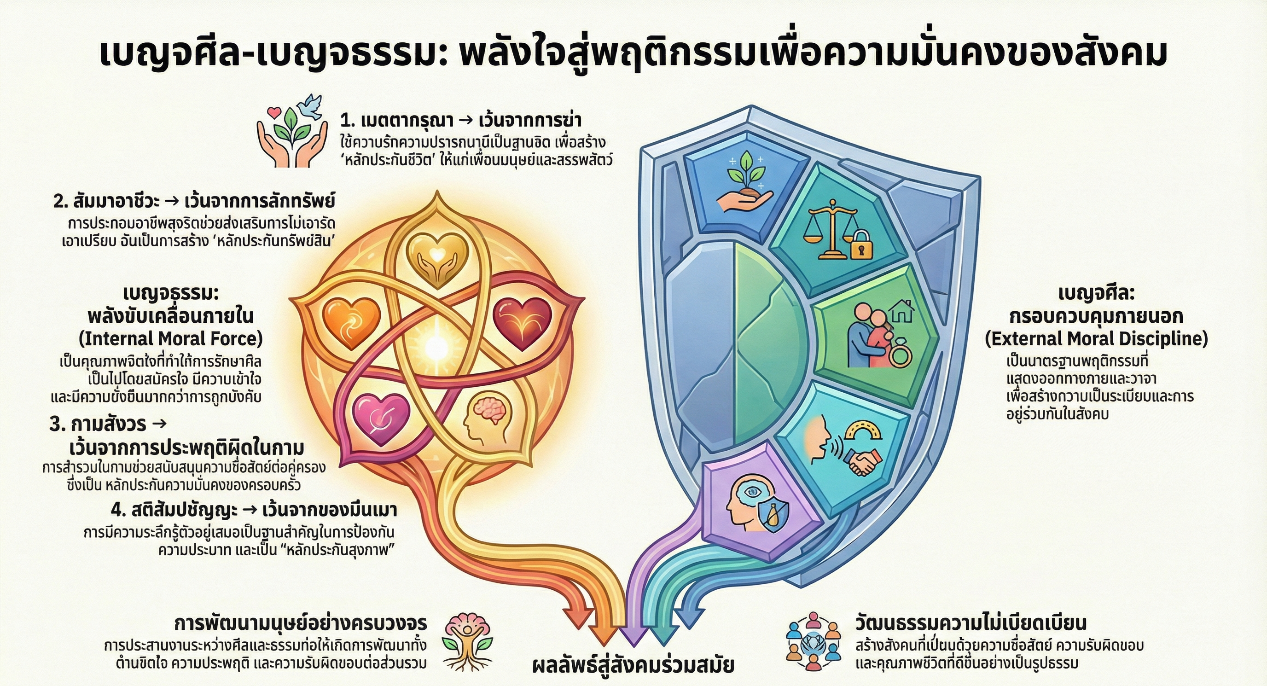
Research Findings were that Pañcadhamma refers to five moral principles that cultivate ethical behavior: 1) Mettā or Loving-kindness) – Genuine goodwill and benevolence towards others and Karuṇā or compassion referring to the wish to help others overcome suffering. 2) Sammā-ājīva or Right Livelihood – Engaging in righteous means of living while avoiding unethical occupations, ensuring that wealth is obtained and used in a just manner. 3) Kāma-saṁvara or Restraint in Sensual Pleasures– Exercising self-control over sexual desires, maintaining fidelity and appropriateness in relationships. 4) Sacca or Truthfulness – Speaking truthfully, refraining from deceit, and fostering trust and harmony in relationships. 5) Sati or Mindfulness referring to the ability to remain aware and attentive and Sampajañña or clear comprehension – Full awareness in thought, speech, and action, ensuring wise and careful conduct in daily life. Analysis of the Five Universal Virtues in Supporting the Five Precepts was classified into; 1) relationship between Pañcadhamma and Pañcasīla is as follows: Mettā-Karuṇā supports abstaining from killing by fostering kindness and compassion, preventing harm to others, and ensuring the protection of life. Sammā-ājīva supports abstaining from stealing by promoting honest and ethical ways of earning a livelihood, ensuring financial security for oneself and society. Kāma-saṁvara supports the third precept or abstaining from sexual misconduct by encouraging self-restraint and fidelity, thus ensuring the stability and security of family life. Sacca supports the fourth precept, abstaining from false speech by advocating honesty and integrity in communication, thereby fostering trust and social harmony, and Sati-Sampajañña supports the fifth precept or abstaining from intoxicants by cultivating mindfulness and clear awareness, preventing the dangers associated with substance abuse and ensuring well-being.
Article Details

This work is licensed under a Creative Commons Attribution-NonCommercial-NoDerivatives 4.0 International License.
The content and information in articles published in Navangkasatthasāsana Review represent solely the opinions and responsibility of the authors. The editorial board of the journal is not required to agree with, nor does it share responsibility for, any part of the articles.
All articles, data, content, images, and other materials published in Navangkasatthasāsana Review are the copyright of the journal. Any individual or organization wishing to reproduce, distribute, or otherwise use all or any part of such materials must obtain prior written permission from Navangkasatthasāsana Review.
References
พระพรหมคุณาภรณ์ (ป.อ. ปยุตฺโต). พจนานุกรมพุทธศาสตร์ ฉบับประมวลธรรม. พิมพ์ครั้งที่ 26. กรุงเทพมหานคร: โรงพิมพ์พระพุทธศาสนาของธรรมสภา, 2556.
พุทธทาสภิกขุ. ศีลธรรมกับการแก้ปัญหาสังคม. กรุงเทพมหานคร: สำนักพิมพ์สุขภาพใจ, 2548.
มหาจุฬาลงกรณราชวิทยาลัย. พระไตรปิฎกภาษาบาลี ฉบับมหาจุฬาเตปิฏกํ 2500. กรุงเทพมหานคร: โรงพิมพ์รุ่งเรืองธรรม, 2511.
________. อรรถกถาภาษาไทย ฉบับมหาจุฬาอรรถกถา. กรุงเทพมหานคร: โรงพิมพ์มหาจุฬาลงกรณราชวิทยาลัย, 2559.
วิชัย สุธีรชานนท์. วิธีสอนศีลธรรมในชั้นประถมศึกษา. กรุงเทพมหานคร: ศึกษาภัณฑ์พาณิชย์, 2517.
