An Analysis Of Sima’s Value Dealing With Sanghakamma Based On Buddhist Disciplines
Article Sidebar
Main Article Content
Abstract
This research has 2 objectives 1) to study the background and significant contents of Sima in Theravada Buddhism, and 2) to analyze Sima’s Value dealing with Sanghakamma based on Buddhist disciplines. It was qualitative method focusing on document investigation.ส่วนบนของฟอร์ม
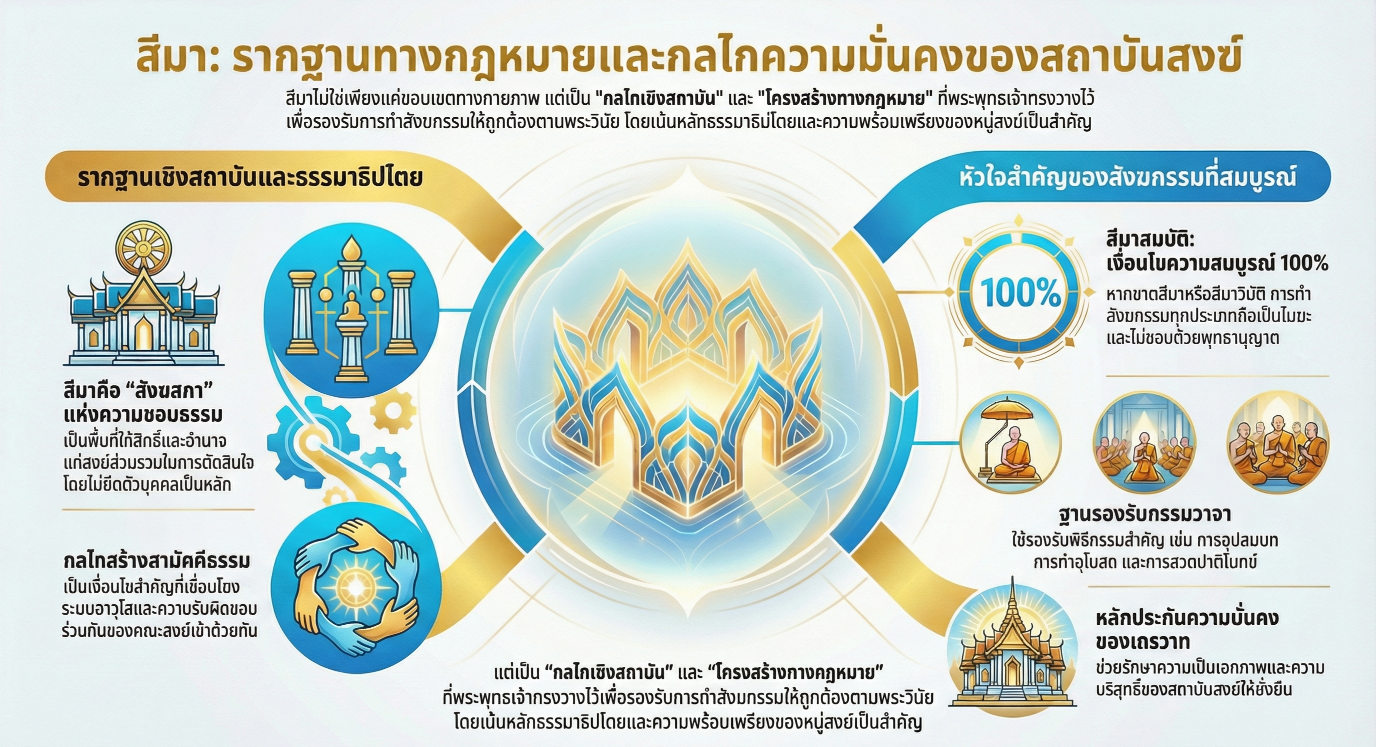
The research findings revealed that the origins of the Sīmā stem from gatherings of Paribbājakas or ascetics who regularly convened for discussions and social interactions every month. These gatherings greatly inspired faith and reverence among the public. Having learned of this, King Bimbisāra sought permission to allow Bhikkhus to meet and discuss the Dhamma at appropriate times. Subsequently, the Sanghas established the Sīmā, a designated boundary for performing various monastic ceremonies or Saṅghakamma. Sīmā signifies the unity of the monastic community and is marked by eight types of boundaries mentioned in Vinaya: mountains, rocks, forests, trees, paths, anthills, rivers, and ponds. This Sīmā is classified into two types: Bounded Sīmā called Padhāsīmā and Unbounded Sīmā called Apadhāsīmā. There are five factors rendering a Sīmā defective, and the attributes of a proper Sīmā are the opposite of these defects. Analysis of the value of the Sīmā in monastic functions based on Vinaya showed that 1) Understanding the value of the Sīmā and monastic unity as it serves as a monastic assembly area where Bhikkhus must reach a consensus during significant functions, such as ordinations or Upasampadā, to ensure validity. Bhikkhus must show respect for one another in hierarchical order based on seniority calculated by years since ordination received from Uposatha and Sīmā, 2) Value of the Sīmā in relation to the establishment of monastic rules. The Buddha established numerous rules concerning the Sīmā and monastic functions, also prohibited certain actions and imposed disciplinary measures on monks who violated these rules, 3) Value of the Sīmā as a Tool for Monastic functions as showed that the major functions, such as Ñattikamma, Ñatti-dutiyakamma, or Ñatti-catutthakamma, must be performed within the Sīmā. However.
Article Details

This work is licensed under a Creative Commons Attribution-NonCommercial-NoDerivatives 4.0 International License.
The content and information in articles published in Navangkasatthasāsana Review represent solely the opinions and responsibility of the authors. The editorial board of the journal is not required to agree with, nor does it share responsibility for, any part of the articles.
All articles, data, content, images, and other materials published in Navangkasatthasāsana Review are the copyright of the journal. Any individual or organization wishing to reproduce, distribute, or otherwise use all or any part of such materials must obtain prior written permission from Navangkasatthasāsana Review.
References
พระมหานามเถระ และคณะบัณฑิต. คัมภีร์มหาวงศ์ ภาค 2. แปลโดย สุเทพ พรมเลิศ. กรุงเทพมหานคร: โรงพิมพ์มหาจุฬาลงกรณราชวิทยาลัย, 2550.
พระราชพงศาวดาร ฉบับพระราชหัตถเลขา. กรุงเทพมหานคร: ม.ป.พ., ม.ป.ป.
มหาจุฬาลงกรณราชวิทยาลัย. พระไตรปิฎกภาษาบาลี ฉบับมหาจุฬาเตปิฏกํ 2500. กรุงเทพมหานคร: โรงพิมพ์รุ่งเรืองธรรม, 2511.
________. อรรถกถาภาษาไทย ฉบับมหาจุฬาอรรถกถา. กรุงเทพมหานคร: โรงพิมพ์มหาจุฬาลงกรณราชวิทยาลัย, 2559.
