การประยุกต์ใช้หลักธรรมในการจัดการสาธารณสงเคราะห์ของคณะสงฆ์ไทย
Article Sidebar
Main Article Content
บทคัดย่อ
บทความวิจัยครั้งนี้มีวัตถุประสงค์ศึกษาวิเคราะห์การจัดการสาธารณสงเคราะห์ของคณะสงฆ์ไทย เพื่อประยุกต์ใช้หลักธรรมในการจัดการสาธารณสงเคราะห์ของคณะสงฆ์ไทย ระเบียบวิธีวิจัยเป็นเชิงเอกสารโดยใช้วิธีการวิเคราะห์เชิงพรรณนา
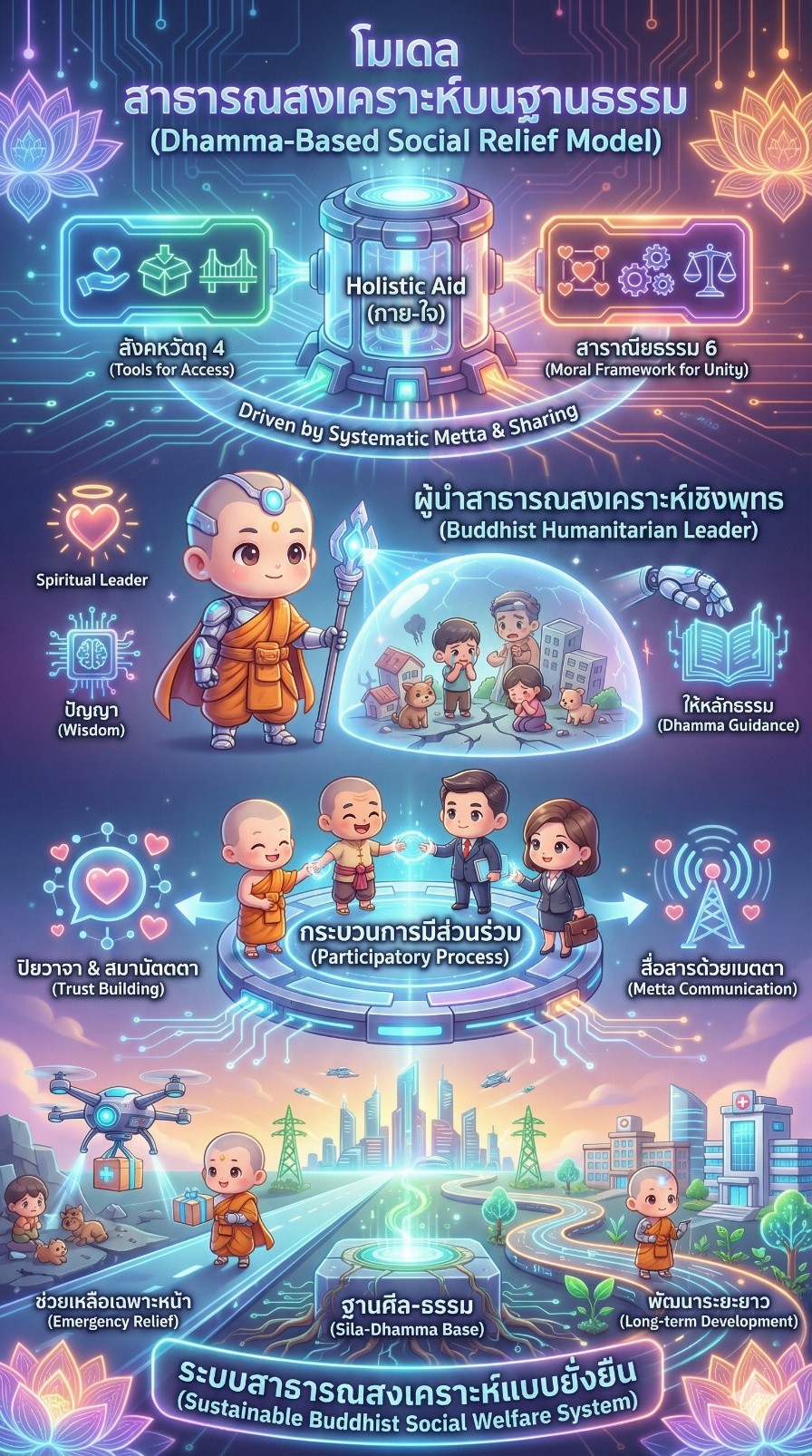
ผลการวิจัยพบว่า งานด้านสาธารณสงเคราะห์ เป็นงานที่เป็นพลังสำคัญในกิจการพระพุทธศาสนาของคณะสงฆ์ไทย เพื่อสร้างคุณประโยชน์แก่สาธารณะและร่วมพัฒนาสังคมในรูปแบบต่าง ๆ ในภาวะวิกฤตพระสงฆ์ได้ให้ความช่วยเหลือเกื้อกูล บรรเทาความทุกข์ด้วยวัตถุสิ่งของจำเป็นเบื้องต้น พระสงฆ์ต้องนำหลักธรรมมาใช้ประจำใจคือหลักพรหมวิหาร 4 ได้แก่ การช่วยเหลือเกื้อกูลต่อกันระหว่างวัดกับชาวบ้าน ซึ่งประกอบด้วย เมตตา กรุณา มุทิตาและอุเบกขา ถือเป็นกุศลที่เป็นกรรมดีเพื่อสร้างสังคมที่เปี่ยมด้วยพรหมวิหาร และหลักสังคหธรรม 4 ได้แก่ 1) ทาน คือ เอื้อเฟื้อเผื่อแผ่ 2) ปิยวาจา คือกล่าวคำสุภาพ ไพเราะน่าฟัง 3) อัตถจริยา คือช่วยเหลือด้วยแรงกายประพฤติในสิ่งที่เป็นประโยชน์ต่อคนอื่น 4) สมานัตตา คือ วางตนเสมอต้นเสมอปลาย ประคับประคองจิตใจให้ผู้ประสบภัยก้าวพ้นภาวะวิกฤตที่เกิดขึ้น ดำเนินการช่วยเหลือสังคม ที่ไม่ขัดต่อพระธรรมวินัย การบริหารจัดการงานสาธารณสงเคราะห์ของคณะสงฆ์ไทยควรวางแผนบริหารจัดการ เรื่องกิจกรรม ฝึกอบรมบุคลากรเพื่อเป็นจิตอาสาก่อนจะช่วยงานเพื่อให้มีคุณภาพประสิทธิภาพ คณะสงฆ์ควรเป็นศูนย์ประสานงานการทำงานบำเพ็ญประโยชน์ต่อประชาชน ดำเนินกิจกรรมที่จะต้องระดมทุนเพื่อสาธารณชน เตรียมพร้อมตั้งหน่วยสงเคราะห์ไว้เป็นที่รองรับพักพิงหากจำเป็น
Article Details

อนุญาตภายใต้เงื่อนไข Creative Commons Attribution-NonCommercial-NoDerivatives 4.0 International License.
เนื้อหาและข้อมูลในบทความที่ลงตีพิมพ์ในวารสาร นวังคสัตถุสาสน์ปริทรรศน์ถือเป็นข้อคิดเห็นและความรับผิดชอบของผู้เขียนบทความโดยตรงซึ่งกองบรรณาธิการวารสาร ไม่จำเป็นต้องเห็นด้วย หรือร่วมรับผิดชอบใด ๆ บทความ ข้อมูล เนื้อหา รูปภาพ ฯลฯ ที่ได้รับการตีพิมพ์ในวารสาร นวังคสัตถุสาสน์ปริทรรศน์ถือเป็นลิขสิทธิ์ของวารสาร นวังคสัตถุสาสน์ปริทรรศน์หากบุคคลหรือหน่วยงานใดต้องการนำทั้งหมดหรือส่วนหนึ่งส่วนใดไปเผยแพร่ต่อหรือเพื่อกระทำการใด ๆ จะต้องได้รับอนุญาตเป็นลายลักอักษรจากวารสาร นวังคสัตถุสาสน์ปริทรรศน์ก่อนเท่านั้น
เอกสารอ้างอิง
ปรีชา ช้างขวัญยืน. พระสงฆ์กับการจัดการสาธารณะในสังคมไทย. 2563.
พนม คลี่ฉายา. หลักธรรมกับการบริหารงานในองค์กรศาสนา. 2561.
พระพรหมคุณาภรณ์ (ป.อ. ปยุตฺโต). สังคหวัตถุ 4 และธรรมเพื่อการอยู่ร่วมกัน. 2557.
สำนักงานพระพุทธศาสนาแห่งชาติ. ข้อมูลวัดและพระสงฆ์ 2553. [ออนไลน์]. แหล่งที่มา: http://www.onab.go.th/ [31 สิงหาคม 2565].
สำนักงานสถิติแห่งชาติ. จำนวนประชากร 2553-2566. [ออนไลน์]. แหล่งที่มา: http://www.nso. go.th/ [31 สิงหาคม 2565].
สุทธิพงศ์ ตันตยาพิศาลสุทธิ์. พระราชบัญญัติคณะสงฆ์ กฎกระทรวง กฎมหาเถรสมาคมพร้อม ด้วยระเบียบและคำสั่งมหาเถรสมาคมเกี่ยวกับการคณะสงฆ์และการศาสนา.
