A STUDY OF BUDDHIST PRINCIPLES FOR THE DEVELOPMENT OF A SUFFICIENCY ECONOMY COMMUNITY
Article Sidebar
Main Article Content
Abstract
The research paper aims to analyze the Buddhist principles related to the development of a sufficiency economy community for supporting the development of a sufficiency economy community. The researcher used a qualitative study method by studying books, textbooks, documents, articles and related research. along with electronic media related. The results of the study can be summarized as follows:
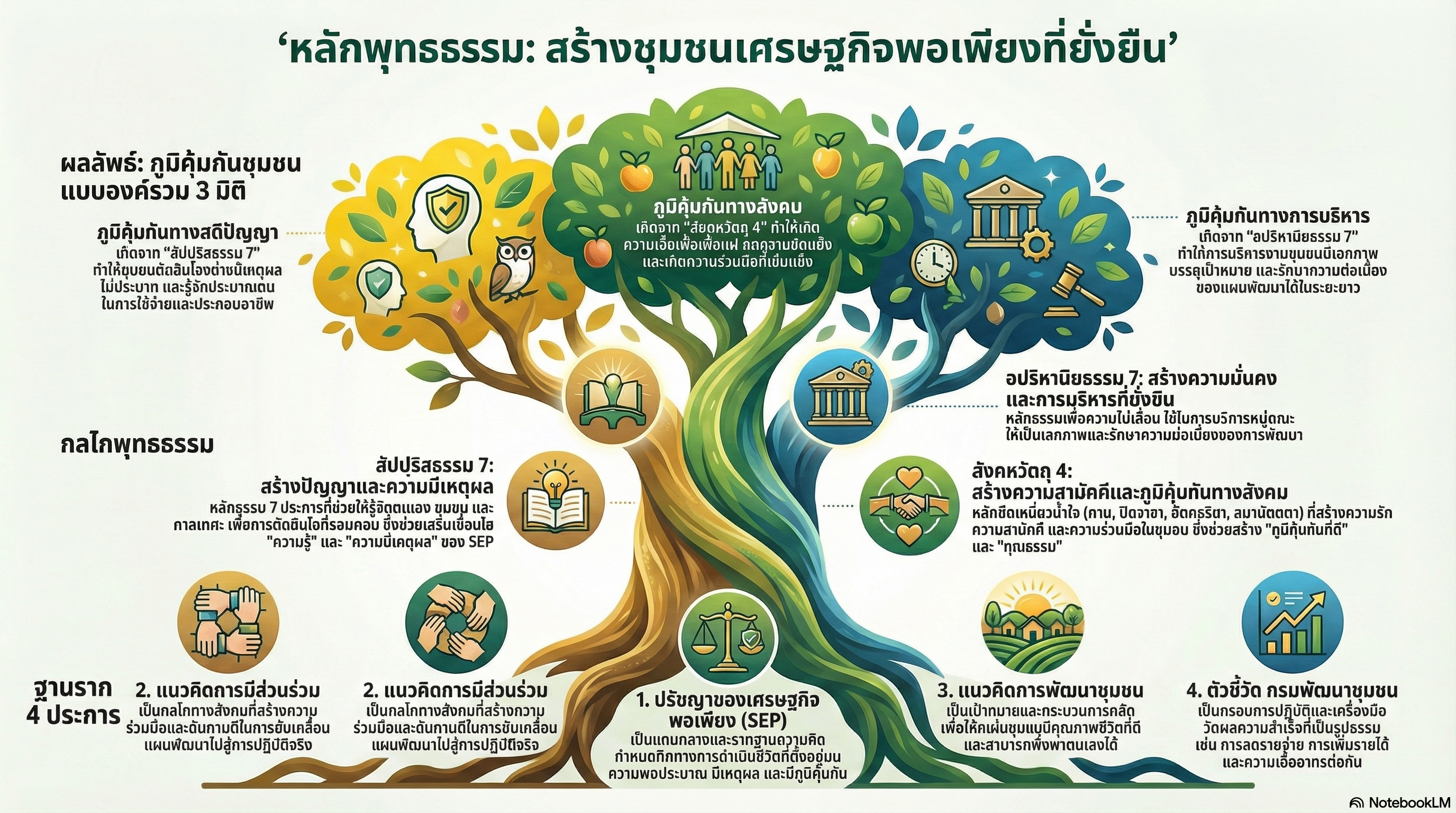
Buddhist principles related to the development of the Sufficiency Economy Community include of 7 Aparihāniyadhamma, 7 Sappurisadhamma, and 4 Sangha Vatthu. Integrating these Buddhist principles with the philosophy of Sufficiency Economy will help community development a complete Sufficiency economy community development. There are 4 related theoretical concepts for society development, consisting of 1) theoretical concepts regarding community development, 2) theoretical concepts regarding participation, 3) concepts of sufficiency economy village development, and 4) philosophical concepts of sufficiency economy. Sufficiency economy community development must rely on these concepts and Buddhist virtues as tools to promote development. This will enable the community to reach the goals of sustainable development in physical sphere, virtue and mentality.
Suggestions: Relevant government agencies should bring other Buddhist principles related to community development, such as the principles of the 7 Aparihaniyadhamma, 7 of Sappurisadhamma, 4 Iddhipāda, 5 Precepts, and 4 of Sangha Vatthu, etc., to promote in the community so that people in the community have followed to these principles and applied them in various local level agencies such as Provincial Administrative Organizations, Subdistrict Administrative Organization and Municipality, etc.
Article Details

This work is licensed under a Creative Commons Attribution-NonCommercial-NoDerivatives 4.0 International License.
The content and information in articles published in Navangkasatthasāsana Review represent solely the opinions and responsibility of the authors. The editorial board of the journal is not required to agree with, nor does it share responsibility for, any part of the articles.
All articles, data, content, images, and other materials published in Navangkasatthasāsana Review are the copyright of the journal. Any individual or organization wishing to reproduce, distribute, or otherwise use all or any part of such materials must obtain prior written permission from Navangkasatthasāsana Review.
References
กรมการพัฒนาชุมชน, การพัฒนาหมู่บ้านเศรษฐกิจพอเพียง, [ออนไลน์] แหล่งที่มา: https://trang.cdd.go.th/services/ [3 กุมภาพันธ์ 2567].
เกษราภรณ์ บุรวัฒน์ และคณะ, หลักธรรมกับการพัฒนาชุมชนเข้มแข็ง, (วารสารสิรินธรปริทรรศน์ ปีที่ 21 ฉบับที่ 2 กรกฎาคม - ธันวาคม 2563).
ปรัชญาของเศรษฐกิจพอเพียง, [ออนไลน์], แหล่งที่มา: https://www.porpeang.org/ categorycontent/1737/success [30 สิงหาคม 2566].
