A Study of the Contemplation of Feeling in Theravāda Buddhist Scriptures
Article Sidebar
Main Article Content
Abstract
This research paper aims to analyze the concept of Vedanā appearing in Theravāda Buddhist Scriptures using as its object for contemplation leading the mind to attain the enlightenment according to Vipassana cultivation. The data was taken from Buddhist scriptures, namely Tipiṭaka, Aṭṭhakathā, and others concerned. Then it was compiled, explained, and reviewed by experts.
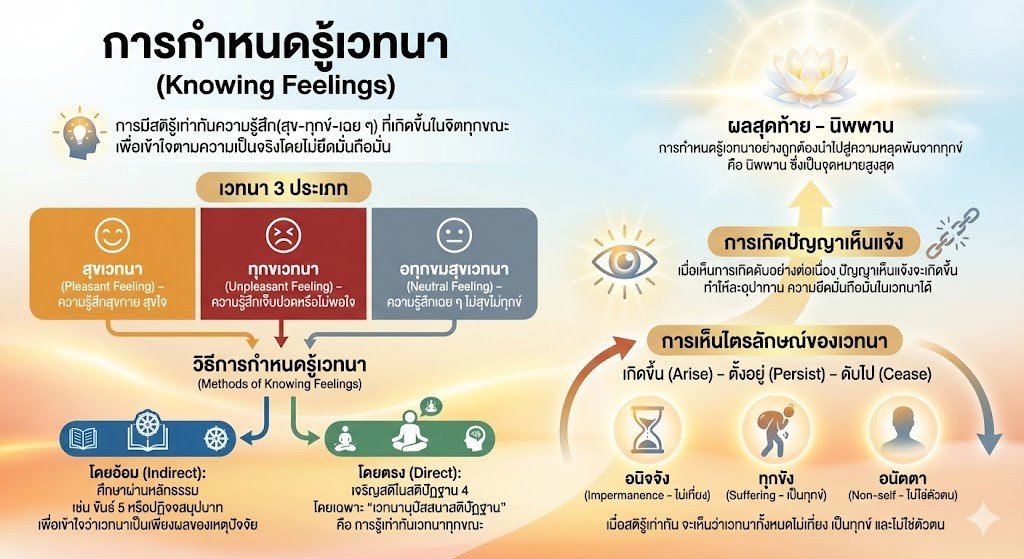
From the study, it was found that Vedanā refers to the sensual feeling arisen through the eyes, the ears, the nose, the tongue, the body and the mind possessed by the living beings. Its arises when contacts of six internal sensual organs, the six external sensual objects, the six consciousness and the six contacts called as Vedanā. As the absolute being, the felling is a kind of mental factors in five Aggregates called Vedanākhandha which is the importance as the life process of all living beings. For insight practice, meditator can contemplate on Vedana or feeling as the objects of contemplation and the base of mindfulness and the clear comprehension which causes the rise of true wisdom realizing Three Characteristics, and leading to abandon all attachment as being, person and self. Vedanā contemplation in Theravada scripture is of 2 aspects:- 1) Indirect contemplation conducted by the Vedana teaching listeners while preached by the Buddha who send their minds along with the essence of teaching, without intensive Vedanā contemplation practice in direct way abandon from defilements and attain the Noble state at different levels, for example, the Pancavaggi-Bhikkhus who got enlightenment after listening to Anattalakkhana Sutta, 2) Direct Vedanā contemplation based on Mahasatipatthansa Sutta called Vedanānupassanāsatipaṭṭhāna seen in the case of Bhikkhu who was bitten by a tiger etc. The advantages of feeling contemplation help reliefs from distorted thought and lethargy and laziness, his mindfulness arose quickly, mind becomes strong without fear of life lost, it finally leads to Arahantaship. The exemplary one was seen in this case of Tissathera, who could endure his painful feeling arising from hitting his two legs with a stone to insist the murders for no escape, he, then contemplated on painful feeling as insight practice until attained Arahantaship in the morning on next day.
Article Details

This work is licensed under a Creative Commons Attribution-NonCommercial-NoDerivatives 4.0 International License.
The content and information in articles published in Navangkasatthasāsana Review represent solely the opinions and responsibility of the authors. The editorial board of the journal is not required to agree with, nor does it share responsibility for, any part of the articles.
All articles, data, content, images, and other materials published in Navangkasatthasāsana Review are the copyright of the journal. Any individual or organization wishing to reproduce, distribute, or otherwise use all or any part of such materials must obtain prior written permission from Navangkasatthasāsana Review.
References
กรมศิลปากร, อุทยานประวัติศาสตร์ สุโขทัย, [ออนไลน์], แหล่งที่มา: https://www. finearts.go.th/sukhothaihistoricalpark/view/22662-วัดศรีชุม.
กรมสุขภาพจิต กระทรวงสาธารณสุข, ฐานข้อมูลรายงานการฆ่าตัวตายของคนไทย, [ออนไลน์], แหล่งที่มา: https://www.dmh.go.th/report/suicide/age.asp.
พระครูสุตธรรมพินิต. เวทนาในฐานะอารมณ์แห่งการภาวนาในพระพุทธศาสนาเถรวาท. วิทยานิพนธ์พุทธศาสตรมหาบัณฑิต. มหาวิทยาลัยมหาจุฬาลงกรณราชวิทยาลัย. 2562.
พระมหาประภาส อภิปุญฺโญ. การศึกษาการกำหนดรู้เวทนาในพระไตรปิฎกเถรวาท. วิทยานิพนธ์พุทธศาสตรมหาบัณฑิต. มหาวิทยาลัยมหาจุฬาลงกรณราชวิทยาลัย. 2563.
พระมหาวิเชียร อภินนฺโท. การพิจารณาเวทนาในสติปัฏฐานสี่: การศึกษาเชิงวิเคราะห์ตามแนวพระอภิธรรม. วิทยานิพนธ์พุทธศาสตรมหาบัณฑิต. มหาวิทยาลัยมหาจุฬาลงกรณราชวิทยาลัย. 2561.
พระมหาสมชาย ปญฺญาวชิโร. เวทนาในฐานะอารมณ์แห่งวิปัสสนากรรมฐาน. วิทยานิพนธ์พุทธศาสตรมหาบัณฑิต. มหาวิทยาลัยมหาจุฬาลงกรณราชวิทยาลัย. 2560.
พระมหาสุทธิพงษ์ กิตฺติเมธี. การวิเคราะห์ขันธ์ 5 ในเชิงพุทธจิตวิทยา. วิทยานิพนธ์พุทธศาสตรมหาบัณฑิต. มหาวิทยาลัยมหาจุฬาลงกรณราชวิทยาลัย. 2564.
พระมหาอดุลย์ ญาณวีโร. เวทนาในพระไตรปิฎก: การศึกษาเชิงวิเคราะห์ตามหลักอภิธรรม. วิทยานิพนธ์พุทธศาสตรมหาบัณฑิต. มหาวิทยาลัยมหาจุฬาลงกรณราชวิทยาลัย. 2562.
ระบบสารสนเทศสถานีตำรวจ สำนักงานตำรวจแห่งชาติ, สถิติฐานความผิดคดีอาญา (คดี 4 กลุ่ม) หน่วยงานสถานีตำรวจ ทั่วประเทศ ตั้งแต่วันที่ 1 มกราคม พ.ศ. 2562-31 ธันวาคม พ.ศ. 2562, [ออนไลน์], แหล่งที่มา: http://thaicrimes.org/pdf/crimes/2566.pdf.
สมาคมมิตรภาพไทย-เวียดนาม, “พระ AI” จากญี่ปุ่น ช่วยเผยแผ่ศาสนาในสังคมยุคใหม่?, [ออนไลน์], แหล่งที่มา: https://www.tvfa.or.th/tvfa_detail.php?qno=4558.
สำนักข่าวไทย, พระพุทธรูปพูดได้ เอเลี่ยนบุกวัด, [ออนไลน์], แหล่งที่มา: https://tna.mcot. net /region-722921.
สำนักงานพัฒนารัฐบาลดิจิทัล (องคการมหาชน) (สพร.), เทคโนโลยีปัญญาประดิษฐ์ สำหรับการบริหารงานและการบริการภาครัฐ เวอรชัน 1, (กรุงเทพมหานคร: บริษัท ส.พิจิตรการพิมพ์ จำกัด, 2562).
แอพดิคัส, ญี่ปุ่นพัฒนาหุ่นยนต์พระสงฆ์ AI ให้ทำหน้าที่แทนพระสงฆ์ในพุทธศาสนา, [ออนไลน์], แหล่งที่มา: https://www.appdisqus.com/pepper-robot-buddhist-japan.
