
Research Title THE STUDENT SUPPORT SYSTEM OF TEACHERS IN UTCHARALAI SCHOOL CLUSTER CAMPUS OF THE SECONDARY EDUCATIONAL NAKORNSAWAN
Keywords:
Student support system, Primary education institutions, Secondary Education Service Area OfficeAbstract
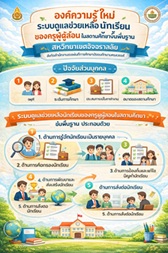
This study aimed to 1) examine the student support systems used by teachers in primary schools within the Atcharalai School Cluster, under the Nakhon Sawan Secondary Educational Service Area Office, and 2) compare the student support systems of teachers in these primary schools, categorized by gender, educational level, work experience, and school size. The sample consisted of 207 teachers in the 2016 academic year. Data was collected using a 5-level Likert scale questionnaire. Statistical analyses included frequency, percentage, mean, standard deviation, t-test, F-test, and Scheffé’ pairwise comparison test.
The research findings revealed that 1) the overall student support system was operating at a very good level. When considering each aspect, it was found that the aspects of knowing students individually, student screening, problem prevention and resolution, and student development and promotion were all operating at a very good level. However, the aspect of student referral was found to be operating at a high level. 2) A comparison showed that the student support system, when categorized by work experience, differed significantly at the .05 statistical level, and when categorized by school size, differed significantly at the .01 statistical level. However, in the aspects of student development and promotion and student referral, when categorized by gender and educational level, no significant differences were found.
References
กัญญา แสงเจริญโรจน์. ( 2553 ). ปัญหาและแนวทางการพัฒนาการดำเนินงานตามระบบดูแลช่วยเหลือนักเรียนระดับประถมศึกษาของโรงเรียนบ้านหนองมะปริง สังกัดสำนักงานเขตพื้นที่การศึกษาระยอง เขต 1. งานนิพนธ์การศึกษามหาบัณฑิต, สาขาวิชาการบริหารการศึกษา, คณะศึกษาศาสตร์, มหาวิทยาลัยบูรพา.
กรมสุขภาพจิต. ( 2546 ). คู่มือครูระบบดูแลช่วยเหลือนักเรียนช่วงชั้นที่ 1– ช่วงชั้นที่ 2 ชั้นประถมศึกษาปีที่ 1 – 6 ). กรุงเทพฯ: องค์การสงเคราะห์ทหารผ่านศึก.
กรมสุขภาพจิต. ( 2552 ). คู่มือครูระบบดูแลช่วยเหลือนักเรียน ช่วงชั้นที่ 1 ช่วงชั้นที่ 2 ชั้นประถมศึกษาปีที่ 1 – 6 ). กรุงเทพฯ: ชุมนุมสหกรณ์การเกษตรแห่งประเทศไทย.
จักรี โพธิ์สำนัก (2555). การดำเนินงานระบบดูแลช่วยเหลือนักเรียนระดับชั้นมัธยมศึกษาสังกัดสำนักงานเขตพื้นที่การศึกษาสระแก้ว เขต 2. งานนิพนธ์ปริญญา การศึกษามหาบัณฑิต, สาขาวิชาการบริหารการศึกษา, คณะศึกษาศาสตร์,มหาวิทยาลัยบูรพา.
เชาวลิต จินดารัตน์. ( 2551). การดำเนินงานตามระบบดูแลช่วยเหลือนักเรียนของโรงเรียนสังกัด
สำนักงานเขตพื้นที่การศึกษาระยอง เขต 2. งานนิพนธ์ปริญญาการศึกษามหาบัณฑิต,
สาขาการบริหารการศึกษา, คณะศึกษาศาสตร์, มหาวิทยาลัยบูรพา.
บุญชม ศรีสะอาด และบุญส่ง นิลแก้ว. (2535). การอ้างอิงประชากรเมื่อใช้เครื่องมือแบบมาตรา
ส่วนประมาณค่ากับกลุ่มตัวอย่าง. วารสารการวัดผลการศึกษามหาวิทยาลัย ศรีนครินทรวิโรฒมหาสารคาม.
ประเสริฐ สวนจันทร์. (2553). การดำเนินงานระบบดูแลช่วยเหลือนักเรียนของโรงเรียนในสังกัดสำนักงานเขตพื้นที่การศึกษาระยองเขต1.งานนิพนธ์ปริญญาการศึกษามหาบัณฑิต,สาขาวิชาการบริหารการศึกษา, คณะศึกษาศาสตร์, มหาวิทยาลัยบูรพา.
เพ็ญศรี นิตยา. (2551). การดำเนินงานระบบดูแลช่วยเหลือนักเรียนในโรงเรียน สังกัดสำนักงานเขตพื้นที่การศึกษาขอนแก่น เขต 4. งานนิพนธ์การศึกษามหาบัณฑิต, สาขาวิชาการบริหารการศึกษา, คณะศึกษาศาสตร์, มหาวิทยาลัยบูรพา.
วีรศักดิ์ เถาหมอ. ( 2552 ). ปัญหาและแนวทางแก้ไขการดำเนินงานระบบดูแลช่วยเหลือนักเรียนของโรงเรียนในสังกัดเมืองพัทยา. วิทยานิพนธ์ศึกษามหาบัณฑิต,สาขาวิชาการบริหารการศึกษา, บัณฑิตวิทยาลัย, มหาวิทยาลัยบูรพา.
สำนักวิชาการและมาตรฐานการศึกษา, สำนักงานคณะกรรมการการศึกษาขั้นพื้นฐาน, กระทรวงศึกษาธิการ. ( 2552 ). การพัฒนาความเข้มแข็งระบบดูแลช่วยเหลือนักเรียนหลักสูตรครูที่ปรึกษา. กรุงเทพฯ: โรงพิมพ์ชุมนุมสหกรณ์การเกษตรแห่งประเทศไทย.
อัจฉราลัย,สหวิทยาเขต. (2558). รายงานผลระบบการดูแลช่วยเหลือนักเรียนประจำปีการศึกษา 2558. นครสวรรค์: โรงเรียนในสหวิทยาเขตอัจฉราลัย สำนักงานเขตพื้นที่การศึกษา มัธยมศึกษา เขต 42.
Krejcie, R. V., & Morgan, D. W. (1970). Determining sample size for research activities. Educational and Psychological Measurement, 30(3), 607–610.
Downloads
Published
How to Cite
Issue
Section
License
Copyright (c) 2025 Vol. 1, No. 3 (September-December) 2025

This work is licensed under a Creative Commons Attribution-NonCommercial-NoDerivatives 4.0 International License.
This article is published under a Creative Commons Attribution-NonCommercial-NoDerivatives 4.0 International License (CC BY-NC-ND 4.0), which allows others to share the article with proper attribution to the authors and prohibits commercial use or modification. For any other reuse or republication, permission from the journal and the authors is required.


