
PROMOTING BUDDHIST AND CULTURAL RELATIONS BETWEEN THAILAND AND JAPAN
Keywords:
Thai–Japanese relations, Thai Dhammaduta monks, Buddhist diplomacy, Buddhist propagation, Thai–Japanese cultureAbstract
This research, entitled aimed to: (1) study the historical background of Buddhist and cultural relations between Thailand and Japan; (2) investigate the roles of Thai Dhammaduta monks in promoting cultural relations in Japan; and (3) analyze Thai Buddhist and cultural relations in Japan. This qualitative study employed documentary research and in-depth interviews. Fifteen key informants were purposively selected, including the President of the Thai Buddhist Monks Assembly in Japan, abbots of Thai temples in Japan, administrators responsible for overseas Dhammaduta monks, a representative of the National Office of Buddhism, and Japanese Buddhist monks. The data were analyzed using content analysis and presented descriptively.
The research findings revealed that:
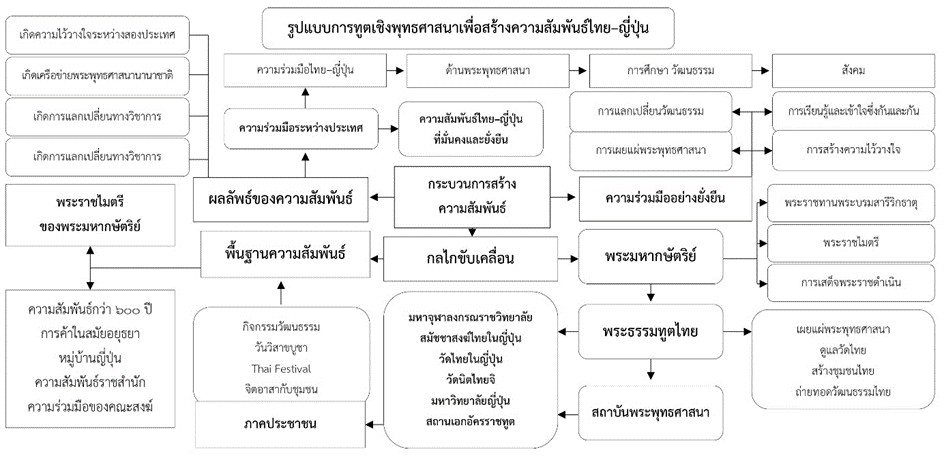
1) Thai–Japanese Buddhist and cultural relations have developed for more than 600 years. They originated from maritime trade and Japanese settlements during the Ayutthaya period and subsequently expanded into royal, religious, and institutional relations. Significant evidence includes the royal bestowal of the Buddha’s relics during the reign of King Chulalongkorn, which led to the establishment of Nittai-ji Temple in Nagoya, as well as cooperation between Mahachulalongkornrajavidyalaya University and Buddhist organizations in Japan. 2) Thai Dhammaduta monks serve as Buddhist missionaries, cultural ambassadors, and social partners. Their major roles include providing intellectual and spiritual guidance, facilitating cultural exchange, and creating psychologically safe spaces. Their propagation approach is represented by the “3S Model”: Sonthana (dialogue), Sati (mindfulness), and Sunthariya (aesthetics). This approach is implemented alongside respect for Japanese laws and customs, proactive use of digital media, and the development of cross-sectarian networks. 3) Thai Buddhist and cultural relations in Japan reflect an integration of Thai Theravada Buddhism with Japanese Mahayana and Zen traditions through insight meditation, compassion, Buddhist arts, and deep listening. These findings led to a Buddhist diplomacy model that connects historical, religious, cultural, institutional, and people-to-people capital. This integrated model contributes to mutual understanding, trust, cooperation, and the sustainable promotion of peaceful relations between Thailand and Japan.
References
กระทรวงการต่างประเทศ. (2560, 26 กันยายน). “130 Years of Thailand–Japan Friendship” exhibition. https://www.mfa.go.th/en/content/5d5bd0d115e39c306002189b
กระทรวงการต่างประเทศญี่ปุ่น. (2569). Japan–Thailand relations: Basic data. Tokyo: Ministry of Foreign Affairs of Japan. สืบค้น 22 สิงหาคม 2569, จากhttps://www.mofa.go.jp/region/asia-paci/thailand/data.html
กองบรรณาธิการศิลปวัฒนธรรม. (2569). พระใหญ่ไดบุตสึ “พระรอด” แห่งญี่ปุ่นกับต้นสน 2 รัชกาล. https://www.silpa-mag.com/history/article_164443
กาญจนา ดำจุติ, พระครูธรรมธรบงกช คนฺธาโร (ไกรทอง), และพระครูสุจิตกิตติวัฒน์. (2560). พุทธวิธีการเจริญสัมพันธไมตรี. วารสาร มจร หริภุญชัยปริทรรศน์, 1(2), 58–68. https://so04.tci-thaijo.org/index.php/JMHR/article/download/173122/124086/
ธานี สุขเกษม, และวุฒิพงศ์ บัวช้อย. (2564). ความสัมพันธ์ระหว่างอยุธยาและญี่ปุ่น ตั้งแต่ พ.ศ. 2149 ถึง พ.ศ. 2310. วารสารวิชาการอยุธยาศึกษา, 13(1), 7–22. https://so02.tci-thaijo.org/index.php/jas/article/view/248480
ประเวศ วะสี. (2553). พัฒนาการมนุษย์และสังคม. กรุงเทพมหานคร: มูลนิธิพุทธฉือจี้.
พระครูนรนาถเจติยาภิรักษ์ (สมพงศ์ ญาณธีโร). (2561). รูปแบบการเผยแผ่พระพุทธศาสนาเชิงรุกของพระธรรมทูตสายอินเดีย–เนปาลตามหลักพุทธจิตวิทยา [วิทยานิพนธ์พุทธศาสตรดุษฎีบัณฑิต, มหาวิทยาลัยมหาจุฬาลงกรณราชวิทยาลัย].
พระธรรมเมธาภรณ์ (ระแบบ ฐิตญาโณ). (2540). พุทธวิธีเผยแผ่พระพุทธศาสนา. โรงพิมพ์มหามกุฏราชวิทยาลัย.
พระเทพเวที (ประยุทธ์ ปยุตฺโต). (2536). กระแสธรรมเพื่อชีวิตและสังคม. กองทุนวุฒิธรรมเพื่อการศึกษาและปฏิบัติธรรม.
พระมหาบุญทิน ปุญฺญโช (เทาศิริ). (2561). กลยุทธ์การเผยแผ่พระพุทธศาสนาตามหลักปฏิสัมภิทา 4 สำหรับพระธรรมทูตไทยในทวีปยุโรป [วิทยานิพนธ์พุทธศาสตรดุษฎีบัณฑิต, มหาวิทยาลัยมหาจุฬาลงกรณราชวิทยาลัย].
พระมหาสมาน ชาตวิริโย (ศศิสุวรรณพงศ์). (2563). การศึกษาคุณลักษณะที่พึงประสงค์ของพระธรรมทูตในการเผยแผ่พระพุทธศาสนาในประเทศสหรัฐอเมริกา. วารสารสังคมศาสตร์และมานุษยวิทยาเชิงพุทธ, 5(7), 113–125. https://so04.tci-thaijo.org/index.php/JSBA/article/download/242227/166275
พระมหาสุเทพ สุวฑฺฒโน (เหลาทอง). (2562). กลยุทธ์การเผยแผ่พระพุทธศาสนาของพระธรรมทูตสายต่างประเทศ. วารสารมหาจุฬานาครทรรศน์, 6(3), 1363–1378. https://so03.tci-thaijo.org/index.php/JMND/article/view/185481
มหาจุฬาลงกรณราชวิทยาลัย. (2539). พระไตรปิฎกภาษาไทย ฉบับมหาจุฬาลงกรณราชวิทยาลัย. โรงพิมพ์มหาจุฬาลงกรณราชวิทยาลัย.
วิทยาลัยพระธรรมทูต. (2569, 15 กรกฎาคม). มจร จับมือสมัชชาสงฆ์ไทยในญี่ปุ่น เปิดอบรมธรรมทูตคฤหัสถ์ ภาคพื้นเอเชีย รุ่นที่ 2 ณ วัดระฆังญี่ปุ่น หลอมรวมพลังศาสนา-บ้านเมือง-สถาบันพระมหากษัตริย์ สู่เวทีสากล. https://odc.mcu.ac.th/?p=79404
วัดนิตไตจิ. (ม.ป.ป.). เว็บไซต์วัดนิตไตจิ. สืบค้น 22 สิงหาคม 2569, จาก https://www.nittaiji.or.jp/
วัดสุทธิวราราม. (ม.ป.ป.). วัดสุทธิวราราม [เพจ Facebook]. Facebook. สืบค้น 22 สิงหาคม 2569, จาก https://www.facebook.com/Watsuthi2424
สถานเอกอัครราชทูต ณ กรุงโตเกียว. (ม.ป.ป.). วัดนิตไตจิ. สืบค้น 22 สิงหาคม 2569, จาก https://site.thaiembassy.jp/th/info/japanese-shrines/6250
สมัชชาสงฆ์ไทยในญี่ปุ่น. (ม.ป.ป.). ข้อมูลวัดสมาชิกและการดำเนินงานของสมัชชาสงฆ์ไทยในญี่ปุ่น. สืบค้น 22 สิงหาคม 2569, จาก https://watthai.jp
สมัชชาสงฆ์ไทยในญี่ปุ่น. (ม.ป.ป.). วัดสมาชิกสมัชชาสงฆ์ไทยในญี่ปุ่น. สืบค้น 22 สิงหาคม 2569, จาก https://watthai.jp
สุภางค์ จันทวานิช. (2550). สังคมและวัฒนธรรมไทย. สำนักพิมพ์มหาวิทยาลัยธรรมศาสตร์.
อิชิอิ โยเนะโอ และโยชิกาวะ โทชิฮารุ. (2542). ความสัมพันธ์ไทย–ญี่ปุ่น 600 ปี. ชาญวิทย์ เกษตรศิริ และสายชล วรรณรัตน์ (บรรณาธิการ). มูลนิธิโครงการตำราสังคมศาสตร์และมนุษยศาสตร์.
Downloads
Published
How to Cite
Issue
Section
License
Copyright (c) 2026 Journal of Contemporary Buddhist Society = JCBS

This work is licensed under a Creative Commons Attribution-NonCommercial-NoDerivatives 4.0 International License.



