BUILDING IMMUNITY AND INCREASING THE CAPACITY OF SOLID WASTE DISPOSAL TO GENERATE ELECTRICITY IN TAK PROVINCE
Keywords:
immunity, capability, GarbageAbstract
This research aimed to: 1) examine approaches to building community resilience, as well as the benefits and potential impacts that people may receive from future electricity generation from municipal solid waste; and 2) promote participatory resilience, public understanding, and awareness of environmental and pollution-related impacts among local communities. This study employed a qualitative research design using participatory action research as the main research approach.
The target groups consisted of residents living in Mueang Tak District, covering all 11 subdistricts. Participants included four focus groups of residents, with eight participants in each group, totaling 32 participants; two groups of local leaders, with eight participants in each group, totaling 16 participants; and five stakeholder groups, with 10 participants in each group, totaling 50 participants. The research instruments and methods included focus group discussions, collaborative activities, interview forms, questionnaires, SWOT analysis, and public forums.
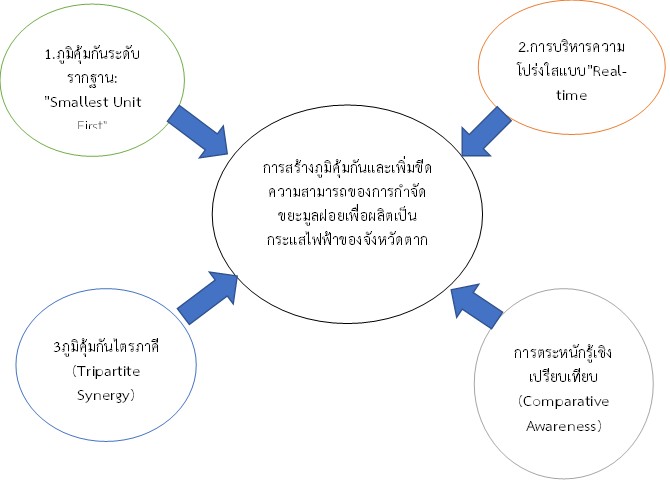
The findings revealed that building resilience regarding the benefits and impacts of electricity generation from municipal solid waste consisted of three key dimensions. First, resilience through participatory processes, or Social License to Operate, requires community participation from the planning stage through technology selection and monitoring. Second, technological resilience requires the selection of technology appropriate to the types of waste in the local area, together with the installation of air pollution control systems that comply with established standards. Third, resilience through community funds and welfare mechanisms is essential for returning benefits to communities surrounding the power plant, particularly in education, public health, and electricity cost reduction for local residents.
The body of knowledge derived from this research indicates that the family institution is a key mechanism for establishing social norms, especially in waste separation. Public participation also helps reduce mistrust toward government projects. Sustainable resilience for future waste-to-energy power plants depends on a transparent and accountable relationship between the power plant and the community, with the family serving as the foundation for cultivating new environmental values.
References
กรมควบคุมมลพิษ กระทรวงทรัพยากรธรรมชาติและสิ่งแวดล้อม: (2551).การจัดการขยะมูลฝอย อย่างครบวงจรคู่มือสำหรับผู้บริหารองค์กรปกครองส่วนท้องถิ่น. (พิมพ์ครั้งที่ 4) . กรุงเทพฯ: โรงพิมพ์ คุรุสภาลาดพร้าว.
กรมควบคุมมลพิษ. (2547). การจัดการขยะมูลฝอยชุมชนอย่างครบวงจร: คู่มือสำหรับผู้บริหารองค์กรปกครองส่วนท้องถิ่น. พิมพ์ครั้งที่ 4, กรุงเทพมหานคร: โรงพิมพ์คุรุสภาลาดพร้าว.
กรมส่งเสริมคุณภาพสิ่งแวดล้อม: (2545). การอนุรักษ์สิ่งแวดล้อม. พิมพ์ครั้งที่ 6. กรุงเทพฯ: โรงพิมพ์ ดอกเบี้ย.
ธงชัย ทองทวี. (2553). สภาพปัญหาการจัดการขยะมูลฝอย องค์การบริหารส่วนตำบลหนองขาม อำเภอจักราช จังหวัดนครราชสีมา. โครงงานวิศวกรรมศาสตรมหาบัณฑิต สาขาวิชาวิศวกรรมโยธา สำนักวิชาวิศวกรรมศาสตร์ มหาวิทยาลัยเทคโนโลยีสุรนารี.
มหาวิทยาลัยเทคโนโลยีพระจอมเกล้าธนบุรี. (2549). คู่มือการบริหารจัดการขยะมูลฝอยแบบครบวงจร ฝ่ายการจัดการสิ่งแวดล้อม ศูนย์การจัดการด้านพลังงานสิ่งแวดล้อมความปลอดภัยและอาชีว อนามัย (EESH). กรุงเทพฯ: มหาวิทยาลัยเทคโนโลยีพระจอมเกล้าธนบุรี.
สำนักงานปลัดกระทรวงมหาดไทย สถาบันดำรงราชานุภาพ. (2543). รายงานผลการศึกษาองค์กรปกครองส่วนท้องถิ่นกับการบริหารจัดการสิ่งแวดล้อม. กรุงเทพฯ: สำนักงานปลัดกระทรวง มหาดไทย.
อดิศักดิ์ โรจนาพงษ์. (2551). แนวทางการจัดการขยะมูลฝอยอินทรีย์ในอุทยานแห่งชาติ. กรุงเทพฯ: สำนักอุทยานแห่งชาติกรมอุทยานแห่งชาติสัตว์ป่าและพันธุ์พืช.
ธารินี จริยาปยุกต์เลิศ, จินดาลักษณ์ วัฒนสินธุ์, และเกษมศานต์ โชติชาครพันธุ์. (2566). ปัจจัยที่ส่งผลต่อการยอมรับโรงไฟฟ้าพลังงานขยะชุมชนของประชาชนในจังหวัดนครศรีธรรมราช. วารสารบัณฑิตแสงโคมคำ, 8(2), 364–386. https://so02.tci-thaijo.org/index.php/jsbs/article/view/262373
ทนงศักดิ์ ปัดสินธุ์. (2561). การมีส่วนร่วมของประชาชนในการจัดการขยะมูลฝอยของชุมชน ตำบลหนองกุงสวรรค์ อำเภอโกสุมพิสัย จังหวัดมหาสารคาม. สถาบันวิจัยและพัฒนา มหาวิทยาลัย ราชภัฏ มหาสารคาม.
Downloads
Published
How to Cite
Issue
Section
License
Copyright (c) 2026 Journal of Contemporary Buddhist Society = JCBS

This work is licensed under a Creative Commons Attribution-NonCommercial-NoDerivatives 4.0 International License.



