การจัดการเรียนรู้หน่วยการเรียนศิลปะ รายวิชาศาสตร์และศิลป์การดำเนินชีวิต กลุ่มวิชาศึกษาทั่วไป มหาวิทยาลัยราชภัฏเลย: การพัฒนาศักยภาพและประสบการณ์ทางสุนทรียภาพ
Article Sidebar
Main Article Content
บทคัดย่อ
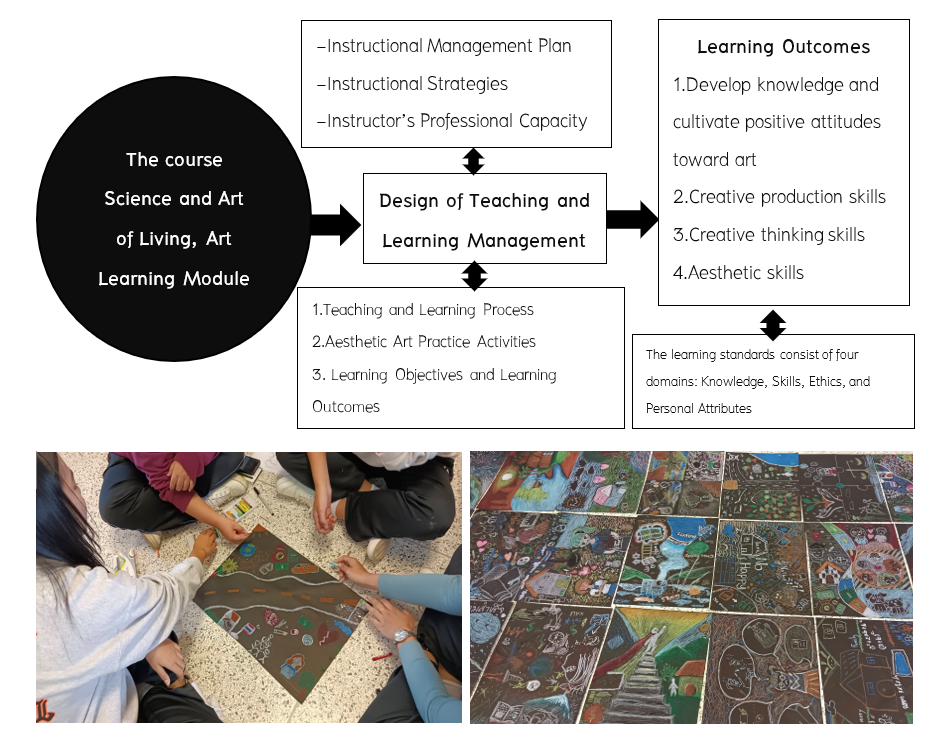
บทความวิชาการนี้ มีวัตถุประสงค์เพื่อศึกษาการจัดการเรียนรู้รายวิชาศาสตร์และศิลป์การดำเนินชีวิต หน่วยการเรียนรู้ศิลปะ กลุ่มวิชาศึกษาทั่วไป มหาวิทยาลัยราชภัฏเลย ใช้วิธีการศึกษาเอกสาร และการทดลองปฏิบัติการ เก็บข้อมูลด้วยการสัมภาษณ์ การสังเกต และการประเมินผลด้วยการวิพากษ์วิจารณ์ผลการเรียนรู้ วิเคราะห์ข้อมูลด้วยการวิเคราะห์เนื้อหา ผลการศึกษาพบว่า การจัดการเรียนรู้วิชาศาสตร์และศิลป์การดำเนินชีวิต หน่วยการเรียนรู้ศิลปะมีแผนการเรียนรู้ชื่อ “การพัฒนาศักยภาพผู้เรียนสู่สุนทรียภาพศิลปะ” จำนวน 1 แผน ใช้เวลาจัดการเรียนการสอน 6 ชั่วโมง ปฏิบัติการสอนตามแผน 2 ครั้ง ๆ ละ 3 ชั่วโมง ใช้รูปแบบการเรียนรู้แบบใช้ปัญหาฐาน การเรียนรู้แบบร่วมมือร่วมใจ การเรียนรู้แบบมีส่วนร่วม รูปแบบการเรียนรู้เชิงรุก และการเรียนรู้แบบประสบการณ์ ใช้การประเมินผลด้วยการสังเกต การสนทนา การทดสอบ การนำเสนอผลงาน และการวิจารณ์ผลงาน สำหรับผลการเรียนรู้จากการทดลองจัดการเรียนการสอนพบว่า ผู้เรียนมีความรู้ความเข้าใจเนื้อหาศิลปะ สามารถสร้างสรรค์ผลงาน วิเคราะห์ วิพากษ์วิจารณ์เนื้อหาเรื่องราว และรูปแบบทางศิลปะได้ ส่วนข้อมูลผลลัพธ์ปลายที่เป็นเป้าหมายของวิชาศึกษาทั่วไป พบว่า ผู้เรียนมีศักยภาพและประสบการณ์ทางสุนทรียภาพจากกระบวนการสร้างสรรค์ การสื่อสารความคิดและจินตนาการอย่างเป็นระบบ ทำให้มีเชื่อมั่น และเคารพในตนเอง สามารถทำงานร่วมกับผู้อื่นได้ มีการแบ่งปัน เชื่อใจกันและเคารพศักดิ์ศรีจากความแตกต่างระหว่างบุคคล
Downloads
Article Details

อนุญาตภายใต้เงื่อนไข Creative Commons Attribution-NonCommercial-NoDerivatives 4.0 International License.


เอกสารอ้างอิง
Changjun, P. (2024). General Education Subject: Roles in and Challenges of Learning and Teaching Management in the 21st century. Journal of Education and Innovative Learning, 4(3), 451-462. (In Thai)
Chartchaiprasert, K. (2010). Aesthetics and Human Resource Development for Developing Thailand toward Knowledge Society. NIDA Development Journal, 50(3), 21-42. (In Thai)
Chuanchom, J., Tumnanchit, B., & Intasara, W. (2023). Students' Opinions on Teaching and Learning Arrangements General Education Courses the Value of Happiness. Journal of Educational Studies, 17(2), 192-202. (In Thai)
Cuseo, J. (2015). Instructional Strategies for Promoting Active Learning. ResearchGate. https://www.researchgate.net/publication/277711348_Active_learning_strategies
Equitable Education Research Institute. (2021). What Else Will Children Learn if They Don't Learn Art: A Critical Question for Art and Learner Development. https://research.eef.or.th/art-education (In Thai)
Faculty of Learning Sciences and Education. (2026). The Value of Art that is Overlooked in an Era of Social Change (Art is All Around). Thammasat University. https://lsed.tu.ac.th/published-message-content-07 (In Thai)
Janhom, P. (2021). The Study in Art Education Learning Management to Develop the 21st Century Learners Skills. Journal of Faculty of Education Pibulsongkram Rajabhat University, 8(2), 253-266. (In Thai)
Jantarak, S. (2018). Instructional Model Development of General Education in Thai Qualifications Framework for Higher Education (TQF: HEd) of General Education Program at Dusit Thani College, Bangkok. Dusit Thani College Journal, 12(1), 263-278. (In Thai)
Jobsdb. (2026). What is Active Learning, and How Does It Help Enhance Proactive Learning. https://th.jobsdb.com/th/career-advice/article/what-is-active-learning (In Thai)
Kunphaisan, P., & Sriraksa, W. (2017). The Effects of Creative Art Activities of Grade 7 Students by Using Problem Based Learning (PBL). KKU Research Journal of Humanities and Social Sciences (Graduate Study), 5(2), 46-55. (In Thai)
Office of General Education. (2024). General Education Category (Revised Edition, B.E. 2024). Loei Rajabhat University.
Ounraun, W., & Onthanee, A. (2023). An Instructional Model Development Based on Social Constructivism and Authentic Learning Approaches to Enhance Differentiated Instruction Ability for Student Teachers. Journal of Education Naresuan University, 25(1), 222-237. (In Thai)
Siripattananuntakul, W. (2025). Art Must Survive When Thailand’s Structures are Undermining Art Education. The 101.World. https://www.the101.world/fine-arts-must-survive (In Thai)
Solano, C. (2023). 10 Easy Strategies to Apply Brain-Based Learning in the Art Room. The Art of Education University. https://theartofeducation.edu/2023/09/sept-10-easy-strategies-to-apply-brain-based-learning-in-the-art-room
Tomljenović, Z. (2015). An Interactive Approach to Learning and Teaching in Visual Arts Education. Center for Educational Policy Studies Journal, 5(3), 73–93. https://doi.org/10.26529/cepsj.129
Tongsima, S. (2003). How to Teach Art to Children. Fine Arts Journal: Srinakharinwirot University, 11(12), 49-52. http://thesis.swu.ac.th/swuarticle/Fi_Art/Fi_Artsv11n2(22)p49.pdf (In Thai)
Westminster School. (2026, January 14). The Benefits of Art Education: Fostering Creativity for Life. https://www.westminsterschool.com/blog/benefits-of-arts-in-education
