Learning Management in the Art Module of the “Science and Art of Living” Course in General Education, Loei Rajabhat University: Development of Potential and Aesthetic Experience
Article Sidebar
Main Article Content
Abstract
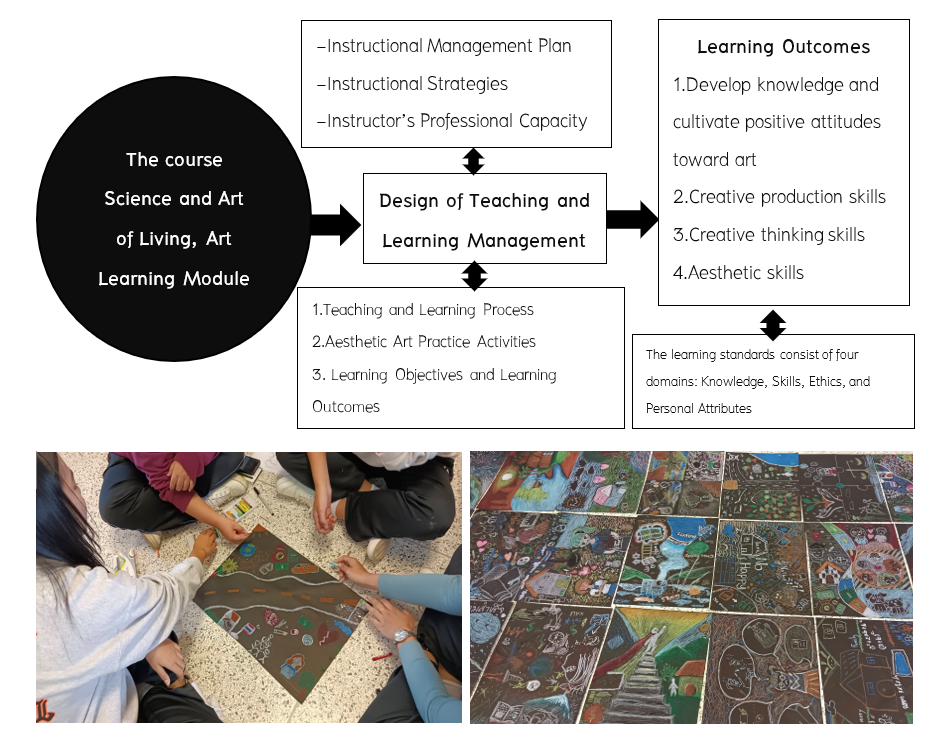
This academic article aimed to examine the learning management of the art module of the “Science and Art of Living” course in General Education at Loei Rajabhat University, to develop learners' aesthetic experiences. Through document analysis and the implementation of practical teaching activities, the study found that this art module, a sub-unit of the course, was designed to develop learners' potential for artistic aesthetic appreciation. It comprised a six-hour lesson plan, divided into three-hour sessions, through an Active Learning approach that integrated lecture and practical methods. The instructional results indicated that implementing this learning plan enabled teachers to conduct activities systematically, leading learners to understand art and develop artistic skills that foster aesthetic sensibility, appreciation, self-understanding, and understanding of others. This was achieved through three core activities: 1) art-based knowledge exchange activities, 2) self-reflective drawing activities, and 3) activities for reflecting upon and communicating socio-cultural issues. Learner reflections revealed that the artistic activities contributed to the development of their mental, emotional, physical, and social well-being; whereas, the art practice facilitated skills in information searching, creative thinking, presentation, critique, and collaboration. Consequently, this process developed their human potential, enabling them to perceive self-worth, respect others, and cultivate an aesthetic sensibility in daily life.
Downloads
Article Details

This work is licensed under a Creative Commons Attribution-NonCommercial-NoDerivatives 4.0 International License.


References
Changjun, P. (2024). General Education Subject: Roles in and Challenges of Learning and Teaching Management in the 21st century. Journal of Education and Innovative Learning, 4(3), 451-462. (In Thai)
Chartchaiprasert, K. (2010). Aesthetics and Human Resource Development for Developing Thailand toward Knowledge Society. NIDA Development Journal, 50(3), 21-42. (In Thai)
Chuanchom, J., Tumnanchit, B., & Intasara, W. (2023). Students' Opinions on Teaching and Learning Arrangements General Education Courses the Value of Happiness. Journal of Educational Studies, 17(2), 192-202. (In Thai)
Cuseo, J. (2015). Instructional Strategies for Promoting Active Learning. ResearchGate. https://www.researchgate.net/publication/277711348_Active_learning_strategies
Equitable Education Research Institute. (2021). What Else Will Children Learn if They Don't Learn Art: A Critical Question for Art and Learner Development. https://research.eef.or.th/art-education (In Thai)
Faculty of Learning Sciences and Education. (2026). The Value of Art that is Overlooked in an Era of Social Change (Art is All Around). Thammasat University. https://lsed.tu.ac.th/published-message-content-07 (In Thai)
Janhom, P. (2021). The Study in Art Education Learning Management to Develop the 21st Century Learners Skills. Journal of Faculty of Education Pibulsongkram Rajabhat University, 8(2), 253-266. (In Thai)
Jantarak, S. (2018). Instructional Model Development of General Education in Thai Qualifications Framework for Higher Education (TQF: HEd) of General Education Program at Dusit Thani College, Bangkok. Dusit Thani College Journal, 12(1), 263-278. (In Thai)
Jobsdb. (2026). What is Active Learning, and How Does It Help Enhance Proactive Learning. https://th.jobsdb.com/th/career-advice/article/what-is-active-learning (In Thai)
Kunphaisan, P., & Sriraksa, W. (2017). The Effects of Creative Art Activities of Grade 7 Students by Using Problem Based Learning (PBL). KKU Research Journal of Humanities and Social Sciences (Graduate Study), 5(2), 46-55. (In Thai)
Office of General Education. (2024). General Education Category (Revised Edition, B.E. 2024). Loei Rajabhat University.
Ounraun, W., & Onthanee, A. (2023). An Instructional Model Development Based on Social Constructivism and Authentic Learning Approaches to Enhance Differentiated Instruction Ability for Student Teachers. Journal of Education Naresuan University, 25(1), 222-237. (In Thai)
Siripattananuntakul, W. (2025). Art Must Survive When Thailand’s Structures are Undermining Art Education. The 101.World. https://www.the101.world/fine-arts-must-survive (In Thai)
Solano, C. (2023). 10 Easy Strategies to Apply Brain-Based Learning in the Art Room. The Art of Education University. https://theartofeducation.edu/2023/09/sept-10-easy-strategies-to-apply-brain-based-learning-in-the-art-room
Tomljenović, Z. (2015). An Interactive Approach to Learning and Teaching in Visual Arts Education. Center for Educational Policy Studies Journal, 5(3), 73–93. https://doi.org/10.26529/cepsj.129
Tongsima, S. (2003). How to Teach Art to Children. Fine Arts Journal: Srinakharinwirot University, 11(12), 49-52. http://thesis.swu.ac.th/swuarticle/Fi_Art/Fi_Artsv11n2(22)p49.pdf (In Thai)
Westminster School. (2026, January 14). The Benefits of Art Education: Fostering Creativity for Life. https://www.westminsterschool.com/blog/benefits-of-arts-in-education
