
Management of Learning-Conducive Environments in Schools under the Lat Phrao District Office, Bangko
Management of Learning-Conducive Environments in Schools under the Lat Phrao District Office, Bangkok
Keywords:
learning-conducive environment management, educational management, Lat Phrao District Office, BangkokAbstract
This study aimed to 1) examine the level of learning environment management in schools under the Lat Phrao District Office, Bangkok, and 2) compare learning environment management classified by educational qualification and work experience. The sample consisted of 156 teachers in schools under the Lat Phrao District Office, Bangkok, which were selected by referring to the table of Krejcie and Morgan and using proportional sampling. The study instrument was a 5-point rating scale questionnaire on learning environment management with a reliability value of 0.92. The statistics used for data analysis included mean, standard deviation, and independent samples t-test.
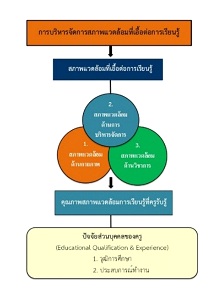
The findings revealed that: 1) the overall management of learning-conducive environments was at a high level. Considering each aspect, the academic environment had the highest mean, followed by the administrative environment and the physical environment, respectively. 2) a comparison of environment management by educational qualification showed no significant differences, both overall and by individual aspects. 3) a comparison by work experience also indicated no significant differences, both overall and by individual aspects.
References
กระทรวงศึกษาธิการ. (2564). รายงานนโยบายและยุทธศาสตร์การศึกษา. กระทรวงศึกษาธิการ.
กิตติญาดา เมฆแสงสี. (2559). การศึกษาปัญหาและแนวทางแก้ปัญหาการจัดการสภาพแวดล้อมและ บรรยากาศที่ส่งเสริมการจัดการเรียนรู้วิชาภาษาอังกฤษของโรงเรียน สังกัดสำนักงานเขตพื้นที่ การศึกษาประถมศึกษานครศรีอยุธยา เขต 1 (วิทยานิพนธ์ปริญญามหาบัณฑิต). มหาวิทยาลัยราชภัฏ พระนครศรีอยุธยา.
จิราพร เครือแวงมน. (2562). การพัฒนาแนวทางการจัดสภาพแวดล้อมการเรียนรู้ภายในสำหรับสถานศึกษา สังกัดสำนักงานเขตพื้นที่การศึกษามัธยมศึกษาเขต 24 (วิทยานิพนธ์ศึกษาศาสตรมหาบัณฑิต, มหาวิทยาลัยมหาสารคาม). มหาวิทยาลัยมหาสารคาม.
พิมพ์วรีย์ ใจสุข. (2560). การจัดสภาพแวดล้อมในสถานศึกษาของโรงเรียนจุฬาภรณราชวิทยาลัย ลพบุรี [รายงานการวิจัย]. คณะศึกษาศาสตร์ มหาวิทยาลัยบูรพา.
บุญชม ศรีสะอาด. (2560). การแปลผลคะแนนแบบมาตราส่วนประมาณค่า: แนวคิดและการประยุกต์ใช้.สำนักพิมพ์มหาวิทยาลัยสุโขทัยธรรมาธิราช.
พระมหาเดชา อมรเมธี. (2556). การบริหารสิ่งแวดล้อมในสถานศึกษาขั้นพื้นฐาน สังกัดสำนักงานเขตพื้นทีการศึกษาประถมศึกษาจังหวัดอ่างทอง (วิทยานิพนธ์). มหาวิทยาลัยมหาจุฬาลงกรณราชวิทยาลัย.
สำนักงานการศึกษากรุงเทพมหานคร. (2565). รายงานสถานการณ์การจัดการศึกษาโรงเรียนสังกัด กรุงเทพมหานคร. สำนักการศึกษา.
สำนักงานเลขาธิการสภาการศึกษา. (2562). รายงานสถานการณ์การศึกษาไทย. กระทรวงศึกษาธิการ.
สุภาวดี ทองสำฤทธิ์. (2561). การศึกษาการจัดสภาพแวดล้อมที่เอื้อต่อการเรียนรู้ในสถานศึกษา
[รายงานการวิจัย]. คณะศึกษาศาสตร์ มหาวิทยาลัยราชภัฏสุราษฎร์ธานี.
สุวิมล ว่องวาณิช, ชนาธิป สูตะบุตร, & กรรณิการ์ รัตนรุ่งเรืองชัย. (2560). การวิจัยทางการศึกษาเพื่อการ พัฒนาคุณภาพผู้เรียน. สำนักพิมพ์แห่งจุฬาลงกรณ์มหาวิทยาลัย.
อภิบาล สุวรรณโคตร์. (2563). การบริหารจัดการสภาพแวดล้อมที่เอื้อต่อการเรียนรู้ของสถานศึกษาใน เครือข่ายพัฒนาคุณภาพการศึกษาหนองบุญมาก 2 สังกัดสำนักงานเขตพื้นที่การศึกษาประถมศึกษา นครราชสีมา เขต 2 (วิทยานิพนธ์). มหาวิทยาลัยราชภัฏนครราชสีมา.
อนุรัตน์ จันทะเกิด. (2565). อนุรัตน์ จันทะเกิด. (2565). การจัดสภาพแวดล้อมในสถานศึกษากลุ่มโรงเรียน เมืองฉะเชิงเทรา 2 สำนักงานเขตพื้นที่การศึกษาประถมศึกษาฉะเชิงเทรา เขต 1 (วิทยานิพนธ์ปริญญา มหาบัณฑิต, มหาวิทยาลัยเกริก). คณะศิลปศาสตร์.
Astin, A. W. (1993). Assessment for excellence: The philosophy and practice of assessment and evaluation in higher education. Oryx Press.
Boettcher, J. V. (2007). Ten core principles for designing effective learning environments. Innovate: Journal of Online Education, 3(3).
Bronfenbrenner, U. (2005). The bioecological theory of human development. Sage.
Krejcie, R., & Morgan, D. (1970). Determining sample size for research activities. Educational and Psychological Measurement, 30, 607–610.
Lippman, P. (2010). Evidence-based design of elementary and secondary schools. Wiley.
Likert, R. (1967). The human organization: Its management and value. McGraw-Hill.
Maxwell, L. (2012). School building condition, social climate, and student achievement. Journal of Educational Administration, 48(2), 199–215.
OECD. (2019). OECD learning compass 2030. OECD Publishing.
UNESCO. (2020). Education in a post-COVID world: Nine ideas for public action. UNESCO.
Downloads
Published
How to Cite
Issue
Section
License
Copyright (c) 2025 Vol. 1, No. 3 (September-December) 2025

This work is licensed under a Creative Commons Attribution-NonCommercial-NoDerivatives 4.0 International License.
This article is published under a Creative Commons Attribution-NonCommercial-NoDerivatives 4.0 International License (CC BY-NC-ND 4.0), which allows others to share the article with proper attribution to the authors and prohibits commercial use or modification. For any other reuse or republication, permission from the journal and the authors is required.


